
Somewhere around hour six of walking on the first day, most visitors hit the same wall. The Acropolis was extraordinary, the Plaka lunch was lovely, and now every cobblestone feels like it's personally trying to end the trip early. This is the part nobody mentions when they hand you their "must-see" list from a trip they took five years ago: Athens is not a city you conquer by moving fast. It rewards a plan that respects heat, distance and the fact that you're on vacation, not a military campaign.
The truth is that three days in Athens is plenty of time to see the essentials and still feel like you actually enjoyed yourself, as long as the itinerary is built around how the city works rather than how far apart the sites look on a map. Ancient Athens is dense and walkable, but it's also hot, hilly in places, and full of moments worth lingering over rather than rushing past. So before locking in times and reservations, it helps to think about pacing first and sights second.
Day One: Ancient Athens Without the Burnout
The Acropolis deserves the freshest version of you, which means going early, ideally right at opening, before the buses arrive and the marble starts radiating heat like a stovetop. Most first-time visitors underestimate how exposed the site is - there's almost no shade - so this is the one place where an early start isn't just a tip, it's the difference between an inspiring visit and a miserable one. Afterward, the Ancient Agora is genuinely worth visiting and often gets skipped in favor of photo time at the Parthenon, but it gives a much better sense of what daily life actually looked like in classical Athens.
By early afternoon, energy dips are normal, and this is where a lot of itineraries fall apart because people try to push through instead of resetting. A relaxed lunch in Plaka, in one of the quieter side streets away from the main tourist strip, does more for the rest of your trip than another hour of walking. Plaka itself rewards slow wandering - small chapels tucked between houses, bougainvillea spilling over balconies, the occasional cat asleep on a windowsill like it owns the place.
Day Two: Neighborhoods, Markets and a Different Pace
The second day is where Athens stops feeling like a checklist and starts feeling like a city people actually live in. Monastiraki's flea market is the obvious starting point, especially on a Sunday when it sprawls further than usual, mixing genuine antiques with tourist kitsch and the occasional genuinely great find. From there, Syntagma Square is a short walk away, and if the timing lines up, the changing of the guard ceremony at the Tomb of the Unknown Soldier is worth catching - it happens every hour, with a longer, more elaborate version on Sunday mornings.
This is also the day to slow down around food, because Athens' food culture doesn't reveal itself in five-star restaurants, it reveals itself in small counters and family-run spots. The souvlaki versus gyros debate is a real one among locals, and trying both side by side, ideally standing at a counter rather than sitting at a tourist-menu restaurant, tells you more about Greek street food than any guide can. Round out the day with the Panathenaic Stadium, the only stadium in the world built entirely of marble and the site of the first modern Olympics in 1896 - a detail that surprises most visitors who assumed it was purely ancient.
What About the Heat, Especially in Summer?
Athens in summer can be genuinely tough on a walking itinerary, with afternoon temperatures that make outdoor sightseeing feel like an endurance sport rather than a vacation activity. The local rhythm - quiet early afternoons, active evenings - exists for a reason, and visitors who fight it tend to remember the heat more than the history. Building in a midday break, even just an iced coffee in the shade for an hour, changes the whole tone of the trip.
This is also where the best time to visit Athens becomes a real planning question rather than an afterthought. Late spring and early autumn offer warm but manageable days, while July and August demand a slower pace and earlier starts regardless of how the itinerary is structured. None of this means summer visits don't work - they absolutely do - it just means the schedule should bend around the heat rather than pretend it isn't there.
Is There a Smarter Way to Cover Ground Than Walking Everything?
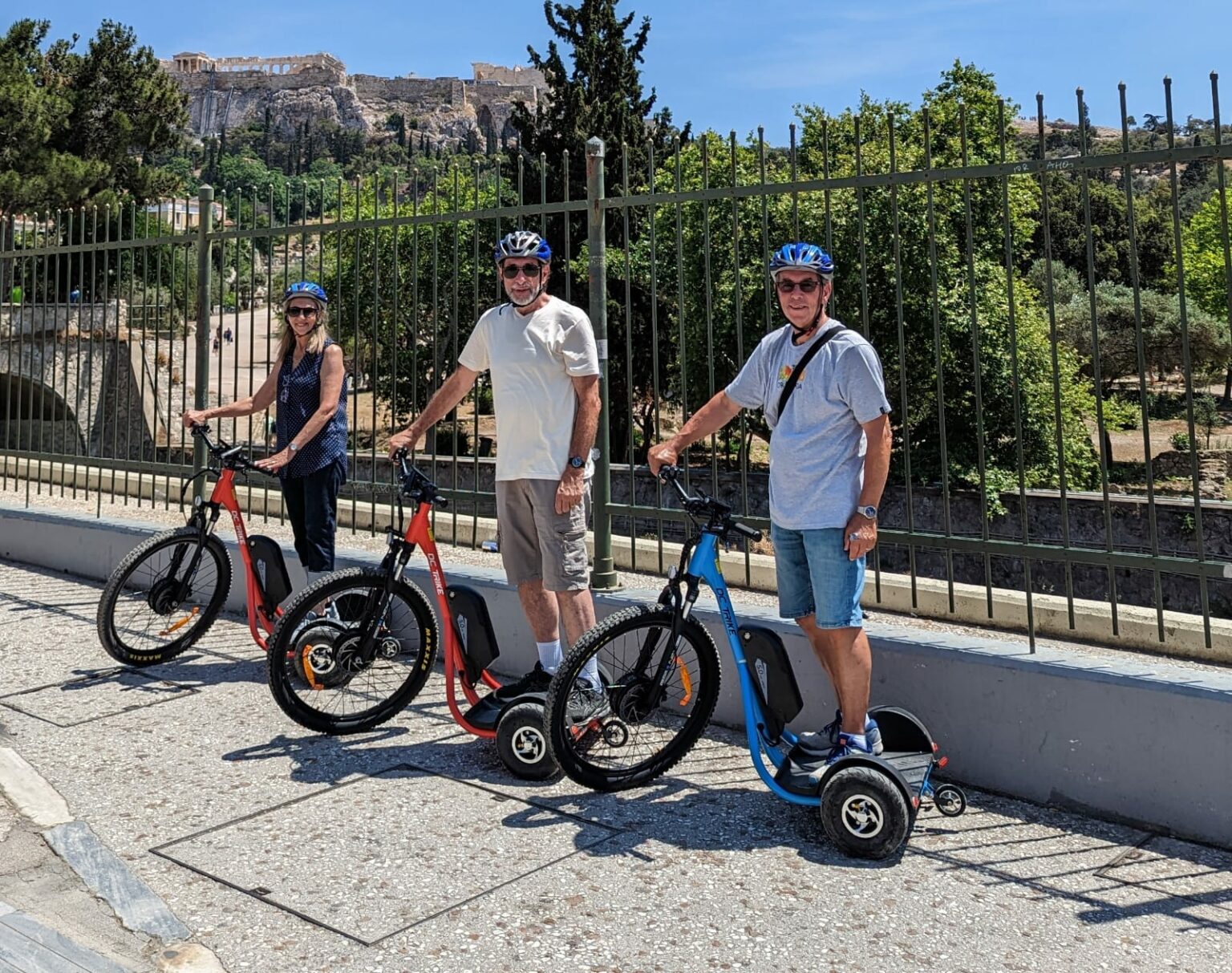
By day two, many travelers start wondering whether there's a way to see more without the legs and feet paying the price for it. This is a fair question, especially for families with children who tire of walking far faster than adults do, or for anyone visiting in warmer months who doesn't want every transition between sites to be a sweaty ordeal. Guided e-bike and e-trike tours have become a popular answer, since they cover the same ground - Acropolis viewpoints, the Agora, Plaka's winding lanes, Syntagma - at a pace that leaves energy for the parts that matter, like actually looking around instead of just getting there.
For families specifically, this solves a real dilemma: kids often want to see everything but can't sustain a full day of walking in the heat, and parents end up cutting the day short out of exhaustion rather than choice. A guided tour on a stable three-wheeled electric trike removes the balancing and pedaling altogether, which means children as young as five or six can ride along with a parent and actually enjoy the sightseeing instead of dreading the next uphill stretch. Ayo Tours Athens runs guided routes exactly along these lines, mixing ancient landmarks with the newer city so the day feels varied rather than repetitive.
Day Three: Slower Sights and the Places Locals Actually Love
The last day is the right moment for Athens' hidden gems, the spots that don't make the first page of most guides but tend to be the ones people talk about once they're home. Anafiotika, the tiny whitewashed neighborhood tucked under the Acropolis that looks like it was lifted from a Cycladic island, is one of the best photography spots in the city and rarely crowded before mid-morning. The National Garden offers genuine shade and quiet, a rare thing in central Athens, and works well as a midday reset between sights.
This is also a good day for a food-focused walk through a market like Varvakios, where the fish and produce stalls give a much rougher, livelier sense of the city than any restaurant can. Families traveling with kids often find this kind of day - shorter distances, more stops, more room to wander - fits better than a packed sightseeing list, since children respond better to variety than to marathon walking.
Three days in Athens works best when the itinerary bends to the city rather than the other way around - early mornings for the big sites, slower afternoons for food and neighborhoods, and enough flexibility built in that a hot afternoon or a tired child doesn't derail the whole plan. Athens has been patient with visitors for a few thousand years already. It doesn't need to be rushed, and neither, really, do you.
Frequently asked questions
What are the must-see sites to visit in Athens over three days?
The Acropolis, Ancient Agora, and Plaka are essential on day one. Day two should include Monastiraki market, Syntagma Square, and the Panathenaic Stadium. On day three, add the Temple of Olympian Zeus, explore local neighborhoods, or take a themed food tour. These cover ancient and modern Athens without overloading your schedule.
How should I plan a three-day Athens itinerary to avoid exhaustion?
Start early at major sites like the Acropolis to beat heat and crowds, then rest during the hottest afternoon hours with lunch and a break in the shade. Balance famous landmarks with slower exploration of neighborhoods and street food stops. Electric trike tours let you cover more ground comfortably, especially useful if summer heat is a concern.
Is three days enough time to see Athens?
Yes, three days is enough to experience the main ancient sites, local neighborhoods, and Greek food culture without feeling rushed. The key is building rest time into your schedule rather than trying to walk constantly. This pace lets you enjoy Athens as a living city, not just a checklist of monuments.
What's the best way to get around Athens when sightseeing?
Walking works for some sites, but electric trike tours are ideal for covering multiple areas comfortably, especially in warm weather. E-trikes handle hills effortlessly and suit all ages and fitness levels. Self-guided trike rentals also let you explore neighborhoods at your own pace without the physical strain of long walks.
When is the best time to visit Athens for a three-day trip?
Late spring and early autumn offer warm but manageable conditions for sightseeing. Summer heat can be intense, so if you visit July or August, plan earlier starts and longer midday breaks. Winter is mild but can be rainy. Any season works with the right pacing and planning.
Should I book guided tours or explore Athens on my own?
Guided trike tours combine local expertise with comfortable transport, ideal for learning about ancient and modern Athens without exhausting walks. Self-guided exploration works well for Plaka, markets, and neighborhoods. A mix of both - perhaps one guided tour and independent exploration - gives you flexibility while saving energy.