
A visit to the greek mythology sites to see in Athens can start with a surprisingly ordinary question: how much ancient history can everyone in the group enjoy before the walk becomes too much? A couple may be happy to linger over every carved stone, while children are already eyeing the next snack stop.
Athens makes that balance possible. Stories of Athena, Zeus and the city’s legendary past sit beside busy squares, shaded lanes and cafés, so the day can feel like time spent in a living city rather than a march between ruins. The trick is choosing a few places that connect well, then leaving room for a pause.
Which Greek mythology sites to see in Athens belong on one day?
The Acropolis is the natural starting point for many visitors. The Parthenon is dedicated to Athena, the goddess who, according to myth, won the city’s devotion by offering the olive tree. On the rock, the Erechtheion brings another layer of legend: its porch of Caryatids stands near the spot traditionally linked with the contest between Athena and Poseidon.
From there, the Ancient Agora is a manageable next stop, though the route and time needed depend on the heat and how long the Acropolis visit takes. The Agora was a centre of public life, and the Temple of Hephaestus offers a striking view of a sanctuary dedicated to the god of craftsmanship. A family might enjoy spotting its columns from a distance before deciding whether to explore the grounds.
What does the Temple of Olympian Zeus add?
The Temple of Olympian Zeus gives a sense of scale that is hard to get from photographs. Only a small portion of the enormous temple remains standing, but its columns make the ambition of the ancient project easy to picture. The site also connects the city to Zeus, king of the gods, and to the long history of rulers who wanted to leave a mark on Athens.
It sits near the Acropolis and the Panathenaic Stadium, so these sights can fit into the same broad itinerary. Still, seeing all three on foot may feel like too much on a hot afternoon, especially with younger children or anyone who finds uneven stone tiring. A taxi, a shaded break or a shorter visit can be more rewarding than insisting on every stop.
How can you connect the myths to the city today?
Myth is easier to remember when it appears alongside everyday Athens. After the Acropolis, wandering through Plaka can bring the pace down: narrow streets, small shops and café tables offer a chance to talk over what the group has seen. Monastiraki adds a different mood, with its market streets and views back toward the ancient hill.
The Panathenaic Stadium is a useful modern-day contrast. Its history is tied to athletic competition and the revival of the Olympic Games, rather than to one particular myth, but it helps make Athens’ long past feel less distant. A visitor interested in an Athens history timeline for visitors may find that setting ancient stories alongside later landmarks makes the city’s layers easier to follow.
Is a mythology-focused visit manageable with children?
It can be, provided the day is planned around energy rather than a fixed number of monuments. Children may remember the story of Athena and the olive tree better than a long explanation of temple architecture. A short stop to share an olive snack in Plaka, or a simple “which god would you choose?” question, can make the history feel part of the day.
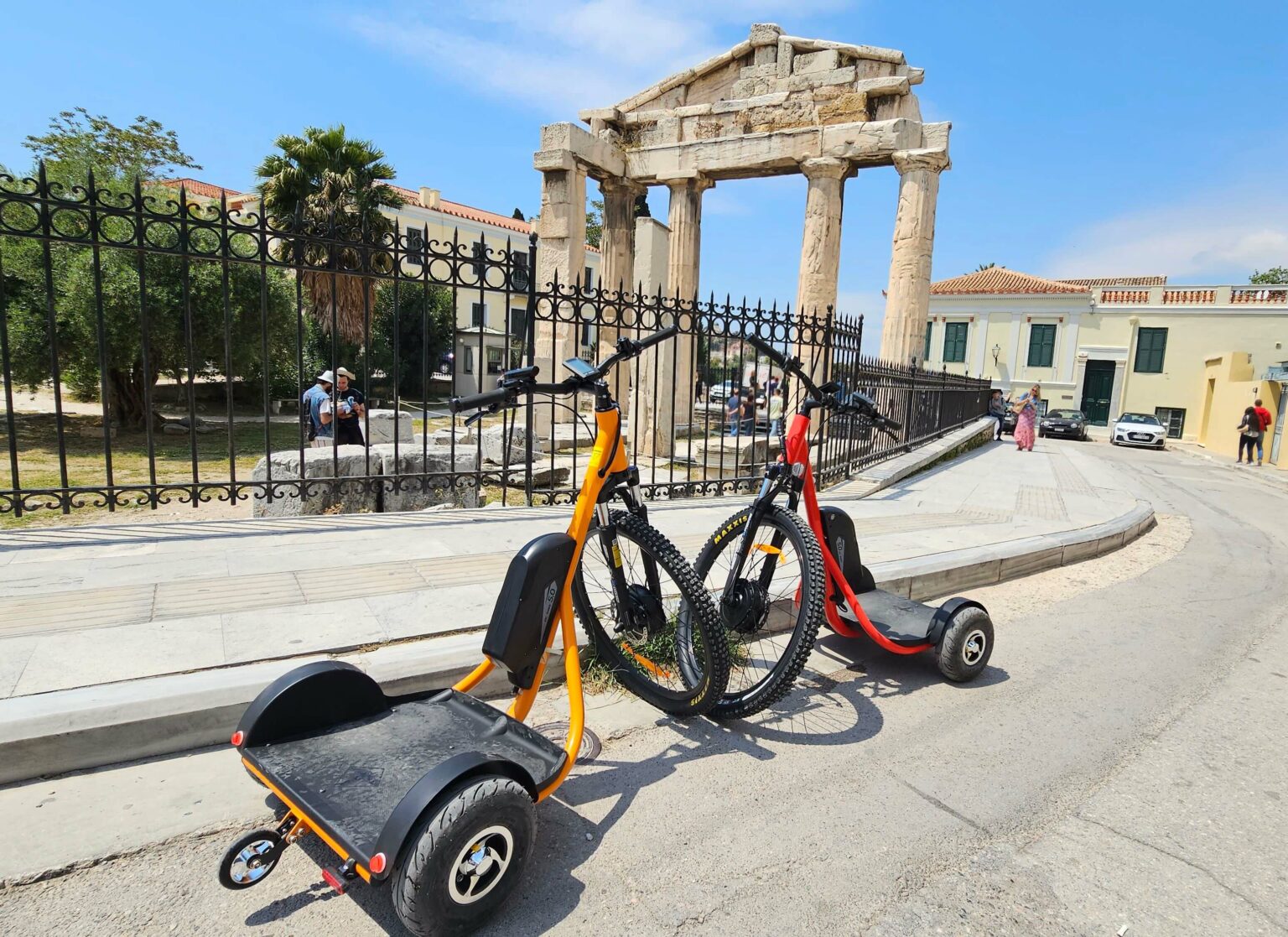
The ground at archaeological sites is often uneven, and shade can be limited. Comfortable shoes, water and a slower start make a real difference. For children aged five to seven, some guided options use electric trikes with a parent riding alongside; this can reduce long stretches of walking, but it is worth checking route, age and safety arrangements before booking.
Do you need a guide to understand the stories?
A guide is helpful when the names and relationships begin to blur. It is easy to mix up Athena’s olive tree, Poseidon’s claim to the city and the role of Hephaestus if each site is approached as a separate stop. A knowledgeable local guide can connect the stories to the stones and point out details that are easy to miss, such as traces of decoration or the way a monument sits within the surrounding streets.
A self-guided visit can work well too, particularly for travellers who prefer to stop when something catches their eye. A short description read before entering each site is often enough to give the visit shape. The choice depends less on how much someone knows than on whether they enjoy reading and interpreting as they go.
What if the walking is the part you are worried about?
The main challenge is often the combination of distance, sun and uneven paving, not the monuments themselves. A route that looks short on a map can take longer when it includes steps, crowds and stops for photos. In summer, even the walk between the Acropolis and the Temple of Olympian Zeus can feel demanding in the middle of the day.
There is no need to treat a city visit as an endurance test. Public transport and taxis can bridge gaps, while a guided e-trike tour may suit visitors who want to cover more ground without pedalling or balancing a bicycle. Ayo Tours Athens is one local operator offering guided rides through central Athens; the same practical questions apply to any provider, including route length, group size and where the tour pauses.
How should you shape the day?
An early start usually helps at the Acropolis, when the light is gentler and the paths may be less crowded. Afterward, choose either the Agora or the Temple of Olympian Zeus as the next substantial stop, rather than assuming both must fit. Lunch and a relaxed walk through Plaka can then give the afternoon a different rhythm.
For a shorter stay, focus on the Acropolis and one nearby site, then enjoy the city at street level. Visitors with more time can return to another monument on a separate day, when the stories have had a chance to settle. The best greek mythology sites to see in Athens are the ones that leave enough energy to enjoy the conversation, the view and the small discoveries between them.
A myth-inspired day in Athens does not need to cover every god or ruin. Pick a couple of places that genuinely interest the group, check the walking conditions, and keep one unplanned pause in reserve. That small bit of flexibility often turns an ambitious itinerary into a day people remember fondly.
Frequently asked questions
Which Greek mythology sites should I visit in Athens?
Start with the Acropolis, where the Parthenon and Erechtheion are linked to stories of Athena and Poseidon. The Ancient Agora adds the Temple of Hephaestus, and the Temple of Olympian Zeus connects the visit to Zeus.
Can I see Athens mythology sites in one day?
Yes, you can visit several major sites in a day, but the pace depends on the heat, walking conditions and how long you spend at each place. Choose a few connected stops and leave time for breaks in Plaka or Monastiraki.
Is the Acropolis connected to Greek mythology?
Yes. The Acropolis is associated with Athena, the city’s patron goddess, and with the mythical contest between Athena and Poseidon. The Erechtheion is one of the landmarks linked to those stories.
Is the Temple of Olympian Zeus worth visiting?
It can be worthwhile if you want to see the scale of an ancient sanctuary dedicated to Zeus. Although only part of the temple remains, its columns are impressive and the site is near the Acropolis and Panathenaic Stadium.
Are Athens mythology sites suitable for children?
They can be enjoyable for families if you keep the itinerary manageable and make time for water, shade and rest. Uneven ground and exposed areas may make some sites tiring, so plan around children’s energy rather than trying to see everything.
Do I need a guide to visit Greek mythology sites in Athens?
A guide can explain how the myths relate to specific temples and landmarks, which helps make the sites easier to understand. Self-guided visits also work well if you prefer to explore at your own pace and read about each place beforehand.