
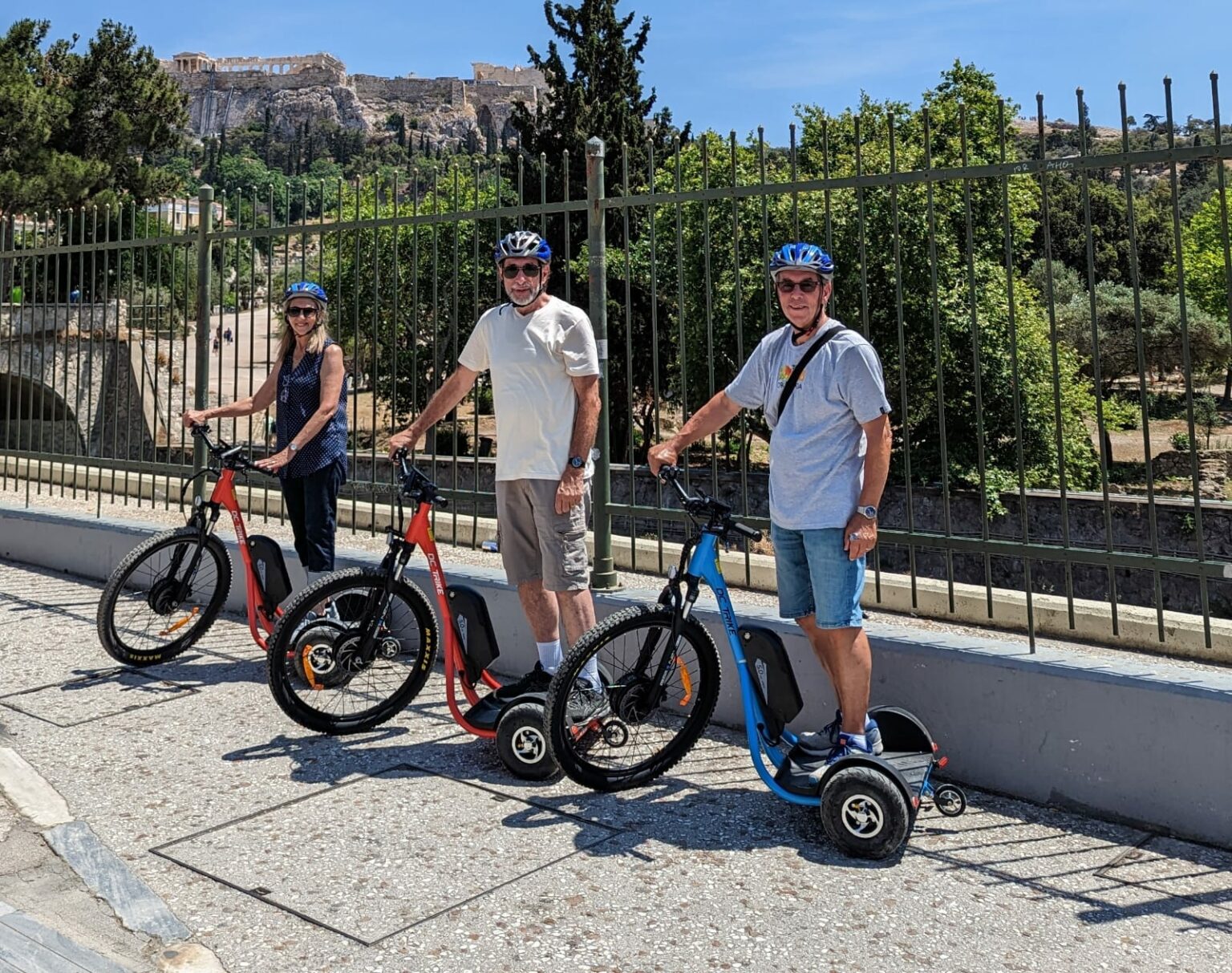
Ancient Athens can look compact on a map, but seeing its landmarks in the heat is a different matter. A visit that begins at the Acropolis may soon involve steep paths, busy crossings and a family member asking how much farther it is to the next stop.
The best plan is not necessarily to fit every famous site into one day. It is to decide what matters most, leave time to pause, and choose a way of getting around that suits the people in the group. A little planning can make the city’s long history feel close at hand rather than like a checklist.
What does “ancient Athens” include?
The phrase can mean the Acropolis and its temples, but the story extends across the city. The Ancient Agora was a civic centre where people gathered for public life and trade; the Temple of Olympian Zeus and the Panathenaic Stadium add other chapters to a visit. Together, these sites give a fuller sense of ancient Athens culture than any single monument can.
Modern Athens sits right alongside these remains. A walk from the Plaka lanes toward Monastiraki can move from a quiet archaeological view to café tables, shopfronts and the rumble of city traffic in a few minutes. That contrast is part of the experience, and it is worth leaving room for it rather than rushing straight between monuments.
How should you plan an Ancient Agora visit?
The ancient agora of Athens is a useful stop for understanding how public life worked beyond the hilltop temples. Its paths pass through open archaeological ground, with the restored Stoa of Attalos housing the Ancient Agora Museum. On a warm afternoon, that combination offers both an outdoor look at the site and a chance to step inside for exhibits.
Before setting out, check current Ancient Agora hours, ticket details and entrance arrangements through official visitor information. Schedules and access rules can change, and a saved screenshot is handy when mobile reception is unreliable. An Athens Ancient Agora map can also help identify the museum and main paths, though on-site signs are usually the simplest guide once inside.
For a focused visit, allow enough time to look around without expecting every stone to tell its story at a glance. An Athens Ancient Agora guide can explain what buildings were used for and point out details that might otherwise blend into the ruins. If travelling independently, a short audio guide or a few notes prepared beforehand can make the walk more meaningful.
Which sights belong in a manageable day?
For a first visit, it often works better to group nearby places than to cross the city repeatedly. The Acropolis viewpoint, Ancient Agora, Plaka and Monastiraki can form one connected day, with a meal or drink break between the archaeological sites. The Temple of Olympian Zeus and Syntagma may fit another route, depending on opening times and how much walking the group is comfortable with.
An Athens ancient Agora tour is one option for visitors who want context while moving between historic places. Guided routes vary, so check what is included rather than assuming every tour enters every site. Some focus on the streets and viewpoints around the monuments; others include admission or a more detailed stop inside the archaeological area.
Can you explore without spending the whole day walking?
This is a common concern, especially for families with young children, older travellers or anyone arriving after a long flight. Central Athens is walkable in parts, but slopes, summer temperatures and uneven paving can make distances feel longer than they look. A plan with shade and regular breaks is often more useful than a packed itinerary.
Transport can help bridge the gaps. Taxis and public transit suit some routes, while a guided electric-trike tour offers another way to see several neighbourhoods without relying on long walks. Stable three-wheeled e-trikes do not require balancing or pedalling, which can make them approachable for a range of fitness levels; children aged five to seven ride with a parent. It is still sensible to confirm the route, age arrangements and accessibility details before booking.
Is a guide worth it, or can you go alone?
Exploring independently gives you control over pace and stops. If the group enjoys reading signs and wandering freely, a self-guided visit can work well, especially with tickets arranged in advance where needed. One common mistake is trying to cover too many sites before lunch, then discovering that everyone is too tired to enjoy the last one.
A knowledgeable local guide can add useful connections between ancient Athens facts and the city people see today. The value is less about hearing every date and more about knowing why a marketplace mattered, what to look for in a temple, or how a modern street grew around an older site. For example, Ayo Tours Athens offers guided and self-use e-trike options; whichever provider you choose, check the group size, route and what the fee covers.
How can food and neighbourhoods round out the visit?
A day among ruins feels more balanced when it includes ordinary city life. After the Ancient Agora, Monastiraki offers cafés and places to stop for a snack, while Plaka’s side streets are better explored slowly than hurried through between attractions. A shaded table and a glass of water can be as important to the day as another landmark.
Food-focused routes can also bring ancient Athens into a wider picture of local culture, though the point is not to turn every meal into a history lesson. A bakery stop or a shared plate gives the group time to rest and talk over what they have seen. For families, that pause can be the difference between one more pleasant stop and calling the day early.
The most satisfying way to see ancient Athens is usually the one that leaves the group curious, not exhausted. Choose a few places that genuinely interest you, check practical details close to the visit, and allow time for the modern streets in between. The monuments are remarkable, but so is the feeling of finding the city’s past tucked into its everyday rhythm.
Frequently asked questions
What are the main ancient sites to see in Athens?
The Acropolis, Ancient Agora, Temple of Olympian Zeus, and Panathenaic Stadium are key places to consider. Each offers a different view of Athens’ history, so choose based on your interests and available time.
How many days do you need to see ancient Athens?
You can visit several major sites in a day, but a slower pace may be more comfortable if you want time for museums, meals, and nearby neighbourhoods. With another day, you can spread out the sights and explore more of the city.
Is the Ancient Agora worth visiting?
The Ancient Agora helps explain how civic and public life developed in Athens, beyond the temples on the Acropolis. Its archaeological remains and museum make it a useful stop for visitors interested in the city’s history.
Can you explore ancient Athens without walking a lot?
Some central sights are close together, but slopes, uneven surfaces, and heat can make walking tiring. Taxis, public transport, and guided electric-trike tours can help reduce longer walks; check route and access details before booking.
Should I visit ancient Athens with a guide or on my own?
A guide can add context and point out details that are easy to miss, while an independent visit offers more control over your pace. Choose according to how much background you want and whether your group prefers a set route.
What should I check before visiting ancient sites in Athens?
Check official visitor information for current opening hours, ticket requirements, and entrance arrangements, since details can change. Wear comfortable footwear, carry water, and leave time for shade and breaks.