
Ask ten travel blogs when to visit Athens and you will get ten confident, slightly different answers. Ask an actual Athenian, though, and you will usually get a shrug followed by "depends what you want from the trip." That is not a dodge. Athens genuinely behaves like a different city depending on the month, and the version of it you meet in July is barely on speaking terms with the version you meet in November.
Most people planning a Greek getaway are really juggling three things at once: how much heat they can tolerate, how many other tourists they are willing to share the Acropolis with, and how flexible their calendar actually is. Someone traveling with grandparents and toddlers has different tolerances than a solo backpacker who doesn't mind sweating through a museum. So instead of chasing a single "perfect month," it helps to know what each stretch of the year actually feels like on the ground, and then match that to your own trip.
Spring: The Sweet Spot Most Locals Recommend
April, May and early June are the months Athenians themselves quietly prefer for showing the city to visiting family. The heat hasn't arrived in full force yet, the light is soft rather than blinding, and the hills around the Acropolis are still green instead of scorched. Wildflowers push up through cracks in ancient stone near the Ancient Agora, which sounds like a postcard cliché until you actually see it happening in person.
This is also when outdoor dining feels effortless rather than like an endurance test. Sitting at a taverna table in Plaka at 2pm in May, working through a plate of souvlaki, is a completely different experience than doing the same thing in August with sweat dripping onto your plate. Crowds are present but manageable, and guided walks or e-trike routes through Monastiraki and Syntagma move at a comfortable pace without anyone wilting halfway through.
Is Summer Really Too Hot to Visit?
Summer gets a bad reputation, and honestly, some of it is earned. July and August regularly push past 35 degrees Celsius, and by midday the marble around the Acropolis radiates heat like a stovetop. Long walking tours in that window can turn a dream trip into a slog, especially for families with young children or anyone with limited mobility who doesn't want to be marching between shade patches all afternoon.
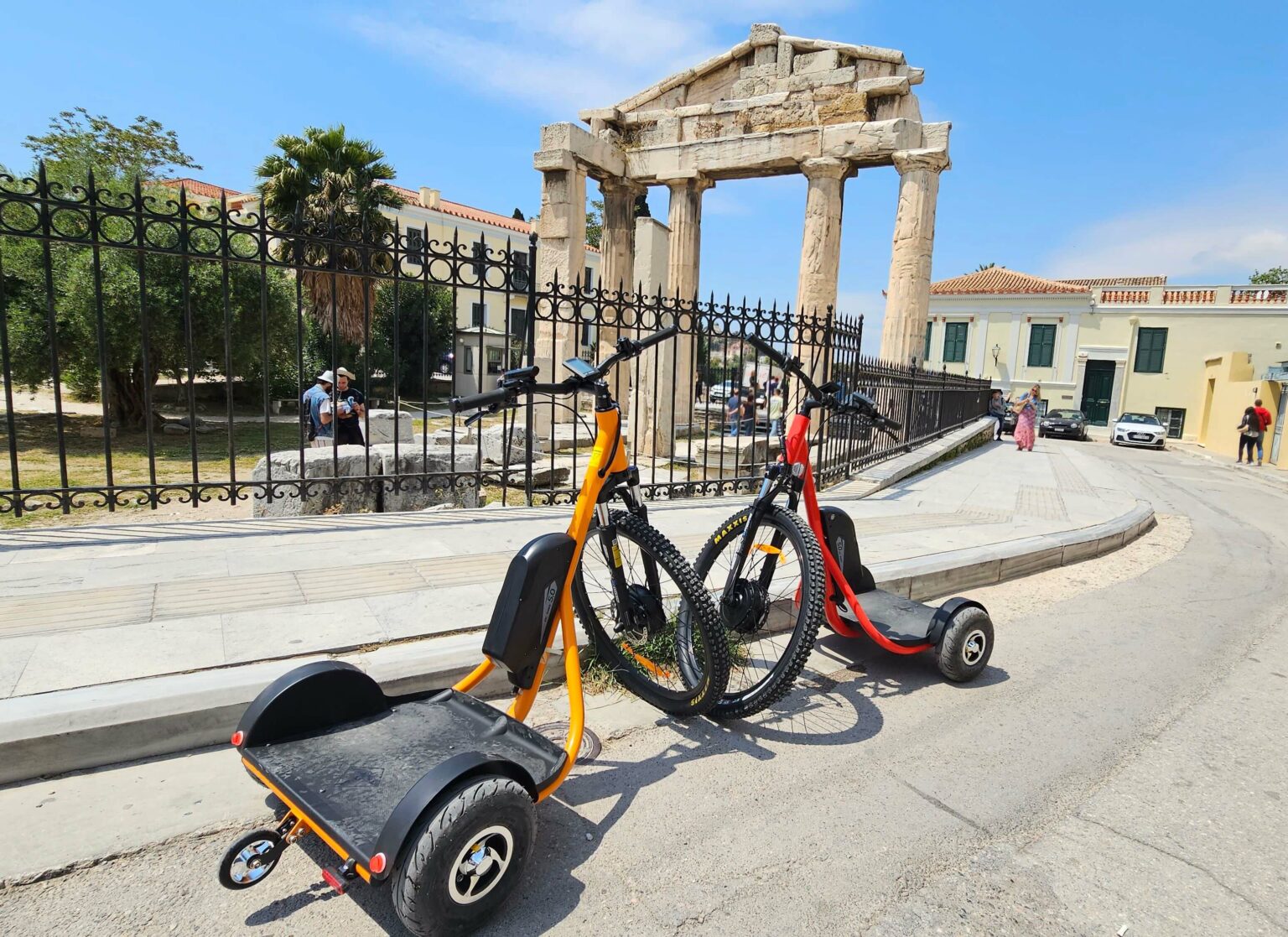
But summer isn't automatically off the table. Athens in summer just requires a different rhythm: mornings and early evenings for sightseeing, a long lazy lunch break in between, and transportation that doesn't demand pedaling uphill in direct sun. This is exactly where an electric trike tour earns its keep - no pedaling, no balancing, a breeze generated by simply moving, and shade-friendly routes planned by guides who know which streets stay cooler. Families visiting in July often find that gliding past the Temple of Olympian Zeus on a trike beats trudging there on foot by a wide margin.
Autumn's Quiet Charm
September through early November is arguably the most underrated window of the year. The sea is still warm enough for a day trip to the coast, the ferocious midsummer heat has broken, and the city's rhythm slows down just enough to notice details you'd otherwise walk past. Photography spots around Monastiraki and the Panathenaic Stadium catch beautiful late-afternoon light this time of year, without the crowds jostling for the same angle.
Food lovers in particular benefit from autumn timing. Restaurants in Plaka aren't rushing through service the way they might during peak season, which makes it a good stretch for slower food-focused explorations - working through the actual differences between souvlaki and gyros, or discovering a family-run spot tucked behind Monastiraki's flea market that never makes the top-ten lists.
What About Winter?
Winter in Athens surprises people. It rarely snows, temperatures often sit comfortably in the mild teens Celsius, and major sites like the Acropolis and Ancient Agora are dramatically less crowded. If your priority is standing at a viewpoint without fifty other people in the frame, January or February might quietly be the best time to visit Athens for you specifically.
The tradeoff is shorter daylight hours and the occasional rainy stretch, so evening plans matter more. Athens by night doesn't shut down in winter, though - tavernas glow warmly, Syntagma stays lively, and indoor food tours or museum visits fill the gaps nicely.
Matching the Season to Your Trip
A couple chasing romantic golden-hour photos will lean toward spring or autumn. A family with young kids managing energy levels and nap schedules might actually do better in the cooler shoulder seasons too, since a five-year-old wilts fast in August heat. Groups more concerned with dodging crowds than dodging weather sometimes deliberately pick winter, accepting shorter days for emptier streets.
There isn't a universal right answer here, and it's fine to admit that. What matters more than the calendar page is building a realistic daily rhythm around whatever month you land in - shade and rest breaks in summer, layered clothing in winter, and always leaving room for a long, unhurried lunch, because that's when Athens tends to reveal itself best regardless of the season.
Frequently asked questions
What is the hottest month in Athens?
July and August are the hottest months, with temperatures regularly exceeding 35 degrees Celsius. Midday heat around major sites like the Acropolis can be intense, making midday sightseeing challenging for families and those with limited mobility.
When is the best time to visit Athens for families with young children?
Spring (April to early June) works well for families since the weather is mild and outdoor activities feel comfortable rather than exhausting. Summer is still possible but requires planning around the heat-early mornings, long lunch breaks, and transportation options that don't involve walking long distances in direct sun help families manage the temperature.
When does Athens have the fewest tourists?
Winter (January to February) and early autumn (September) see significantly fewer crowds compared to peak season. If avoiding long queues and sharing popular viewpoints with other visitors matters to you, these periods offer a quieter experience.
Is autumn a good time to visit Athens?
Yes. September through early November offers warm seas, cooler temperatures than summer, and a slower city pace that lets you notice details and enjoy meals without rushing. It's particularly good for food lovers and photographers seeking better light without peak-season crowds.
Can you visit Athens in winter?
Winter is viable and often underestimated. Temperatures typically stay in the mild teens Celsius with rare snow, and major sites are far less crowded. The main drawback is shorter daylight, so evening activities and indoor experiences like museum visits or food tours work well.