
A full day of sightseeing in Athens can disappear into admission fees, transport tickets and a long lunch. But some of the city's most memorable moments cost nothing: a shaded lane in Plaka, the view from a hill at sunset, or the changing rhythm of a neighborhood square. The best free things to do in Athens often come from choosing the right route, not filling every hour.
That matters especially when traveling with children, arriving on a short layover, or visiting during a hot spell. A free day can still involve plenty of walking, so it helps to think about shade, rest stops and how much ground everyone actually wants to cover. The aim is not to see every landmark from the outside, but to make a day that feels like Athens rather than a race across a map.
Start with the Acropolis from below
The Acropolis is one of the city’s defining sights, and the hill is visible from many public streets and open spaces without buying an entry ticket. Walking around its base brings the ancient walls into view, while the pedestrian paths near Dionysiou Areopagitou offer striking angles toward the rock. Go early or later in the day if possible; midday sun can make even a short walk feel demanding.
For a quieter pause, look for places where the city opens toward the monument rather than staying on the busiest route. A bench or low wall can become a welcome stop for a family carrying water bottles and snacks. Views from outside the archaeological site are not a substitute for seeing the monuments up close, but they make a satisfying option when admission is not in the budget.
Which free things to do in Athens suit a walking day?
Plaka and Monastiraki are easy places to explore at street level, with narrow lanes, small churches, market stalls and plenty to notice in ordinary storefronts. Walking between them is free, though it is wise to keep an eye on time: a quick look at a shop can turn into a slow wander through several streets. On a busy afternoon, stepping one block away from the main square often brings a little more breathing room.
Syntagma Square adds a different perspective, with the Parliament building and the changing of the guards outside it. From there, a walk toward the National Garden offers shade and paths through greenery close to the center. The gardens are particularly helpful for families who need a break from traffic and stone pavements, or for anyone carrying a takeaway coffee and looking for somewhere calm to sit.
Find a viewpoint without turning it into a hike
Philopappos Hill is a popular choice for broad views over the city and toward the Acropolis. Its paths are open to the public, but the climb can be uneven in places, so comfortable shoes matter more than ambitious plans. A late afternoon visit often brings softer light and a gentler temperature than the middle of the day.
Areopagus Hill, near the Acropolis entrance, is another well-known place to look out over Athens. The rock is smooth and can be slippery, especially after rain or when crowded, so it is better to take care than to rush toward the edge for a photo. Sometimes the best free viewpoint is simply a quiet street with a clear line of sight; there is no need to climb every hill to feel the scale of the city.
Mix ancient landmarks with everyday Athens
Some ancient sites can be seen from public paths or from the streets around them, including parts of the Ancient Agora and the Temple of Olympian Zeus. Whether a view is enough depends on what you came for: visitors drawn to inscriptions and ruins may prefer to budget for entry, while others may be content to appreciate the setting from outside. Check current access arrangements before setting out, since public routes and site boundaries can change.
For a contrast with the ancient center, walk toward the Panathenaic Stadium and the surrounding streets. The exterior gives a sense of the stadium’s distinctive marble form, even if you do not go inside. Nearby, the Athens Trilogy - the Academy, University and National Library - offers an impressive stretch of neoclassical architecture that is easy to include on foot. Looking up at the carved details can make an ordinary city walk feel unexpectedly absorbing.
Make room for food, shade and small pauses
A free itinerary does not mean avoiding every purchase. It can simply mean choosing where spending adds comfort: a bottle of water, a coffee, or a pastry from a neighborhood bakery rather than a full meal near a major landmark. If food is part of the day, an Athens food tour can show how local specialties fit into the city’s neighborhoods, but browsing a market or watching a bakery at work is also a low-cost way to get a feel for local life.
In summer, plan the longest outdoor stretch for morning or late afternoon and use the hottest hours for a shaded garden, a relaxed meal or an indoor visit that fits the budget. In cooler months, walking can be easier, though rain may make steep stone paths less comfortable. A small change in timing often matters more than adding another stop, especially when children or older relatives are part of the group.
When free sightseeing needs a little help
It is reasonable to wonder whether a guided activity is worth paying for when the goal is to keep costs down. For a confident walker with time to research, Athens is easy to explore independently, and public squares, streets and viewpoints offer plenty. A guide can make more sense when the group wants context without reading signs all day, or when heat, mobility or limited time makes a long walk less appealing.
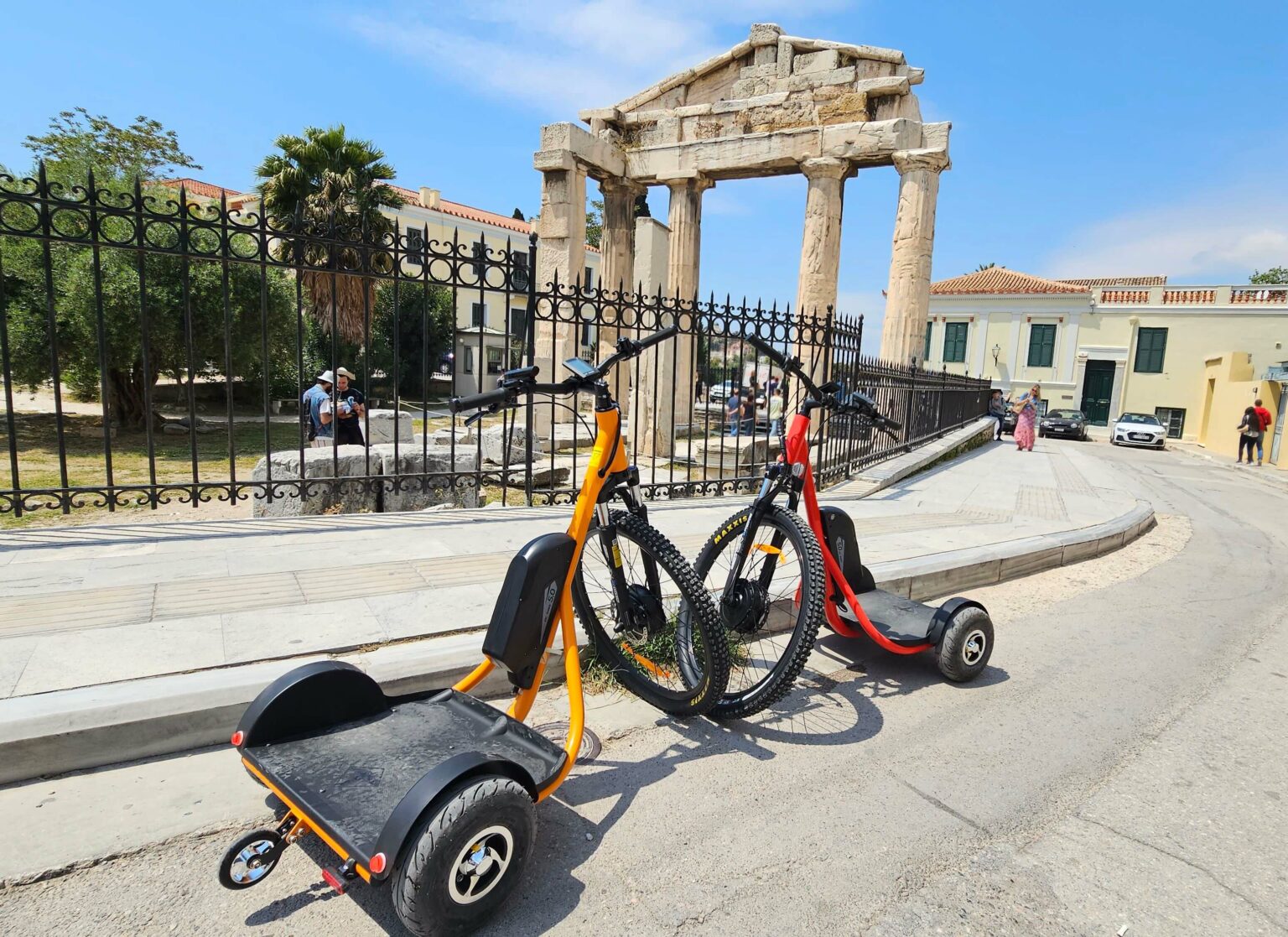
An electric trike tour is one option for covering several neighborhoods with less physical effort. These three-wheeled vehicles do not require balancing or pedaling, and local guides can connect ancient landmarks with modern street life along the way. Ayo Tours Athens, for example, offers guided routes as well as rentals; it is one possibility among many, not a requirement for enjoying the city. The useful question is whether paying for help saves energy or time that matters to your group.
Leave space for an unplanned stop
A good free day in Athens does not have to be a checklist. One person may want to linger in a bookshop, another may prefer a long look at the Acropolis from a quiet lane, and children may be happiest with an unhurried break in the National Garden. Allowing a little unscheduled time keeps those differences from becoming a source of stress.
The most satisfying free things to do in Athens usually come with a practical rhythm: one main walk, a place to sit, and enough time to notice what is around you. Pick a couple of areas rather than crossing the city repeatedly, carry water, and be willing to change plans if the heat or crowds build. Athens rewards that slower pace, and often the small, unplanned moments are the ones people remember.
Frequently asked questions
What are the best free things to do in Athens?
Explore the lanes of Plaka and Monastiraki, visit the National Garden, and watch the changing of the guards at Syntagma Square. For city views, consider Philopappos Hill or the paths around the Acropolis.
Can you see the Acropolis for free in Athens?
You can view the Acropolis from public streets and walking paths around its base without entering the archaeological site. Entry is needed to see the monuments inside the site, so check current ticket and access information if you plan to visit.
Where can I get free views of Athens?
Philopappos Hill and Areopagus Hill are popular spots for views across Athens and toward the Acropolis. Some paths and surfaces can be uneven or slippery, so wear suitable shoes and take care, especially when it is busy.
Is the National Garden in Athens free to visit?
The National Garden is a public green space in central Athens, and visitors can walk its paths and take a break from the busy streets. It is a useful stop for families and anyone looking for shade, though opening arrangements can change.
What free things can families do in Athens?
Families can stroll through Plaka, spend time in the National Garden, and see the changing of the guards at Syntagma Square. To keep the day comfortable, plan for shade, water and rest stops, especially in warm weather.