
You walk up a narrow stone staircase in Plaka, turn a corner, and suddenly the bustle of Athens falls away. The streets narrow to barely shoulder-width. Whitewashed walls rise on either side. Bougainvillea tumbles over doorways in shades of pink and magenta. If you didn't know better, you'd think you'd stepped onto one of the Cycladic islands - Paros, Naxos, or Mykonos - not into a corner of central Athens sheltered in the shadow of the Acropolis. You've found Anafiotika, one of the city's best-kept secrets, and one of the few places where time genuinely seems to move differently.
The neighborhood exists because of a single historical accident. In the 1840s, after Greek independence, builders from the tiny island of Anafi - a speck in the Aegean about 250 kilometers southeast of Athens - came to the capital looking for work. They brought their wives and families, rented plots of land on the lower slopes beneath the Acropolis, and built houses exactly as they would have built them at home. The result was a transplanted island village, complete with the architecture, the narrow lanes, the interior courtyards, and even the social rhythm of their origin. Over time, the neighborhood has become one of the most charming and intimate corners of Athens - and paradoxically, one that many visitors never find.
A geography of quiet and discovery
Anafiotika occupies a small pocket of land on the northeastern slope of the Acropolis, sandwiched between Plaka to the south and Monastiraki to the west. It is not a large area - you can walk through it in less than twenty minutes at an easy pace - but its geography is deliberately confusing. Streets loop back on themselves. Dead ends are common. There is almost no straight line. This is partly by design and partly by accident. The builders followed the contours of the hillside, and the narrow lanes were meant to provide shade and wind protection in summer. What this means for the modern visitor is that a GPS can become almost useless. The alleyways twist so tightly that a phone's location signal bounces between buildings, and paper maps, which do show Anafiotika, rarely capture the true shape of the streets on the ground.
That disorientation is actually the point. Losing your way in Anafiotika is not a problem to solve - it is the experience itself. Each corner reveals something new: a cat sleeping on a doorstep, a woman watering flowers on a window sill, a hidden taverna with three tables, a staircase that leads up to a terrace with a view of the Parthenon that costs nothing to see. The neighborhood invites wandering. Local residents have lived here for generations, and many still do, which gives Anafiotika a lived-in quality that other parts of Plaka have lost to tourism. You will see laundry hanging between buildings. You will hear music and conversation from open windows. You will find tiny shops that sell things to locals, not visitors.
The architecture that built itself
The houses of Anafiotika are small and typically two stories, with exterior staircases, internal courtyards, and whitewashed walls that are repainted regularly in brilliant white. The style is Cycladic - it is what you see in Santorini or Paros - and it survives in Athens nowhere else. The doorways are often painted in blues, greens, or reds. Many houses have small window boxes or pots of herbs and flowers. The effect, repeated house after house, street after street, is hypnotic. It is also deeply practical. The whitewash reflects heat. The narrow lanes between buildings provide shade. The internal courtyards allow air to circulate. These were not decorative choices but survival strategies for a place without modern air conditioning, and they have aged remarkably well.
Inside the houses - where you can occasionally glimpse through open doors - the interiors often have the same spare, uncluttered aesthetic. Furniture is simple. Walls are bare or decorated with family photographs or religious icons. The courtyards frequently contain a lemon tree or a fig tree. This is the Cycladic domestic ideal, and it has been preserved almost by accident. Because Anafiotika remained relatively poor and relatively undeveloped compared to other parts of central Athens, developers never had much incentive to tear the old houses down and build apartment blocks. The neighborhood escaped the worst of Athens's mid-twentieth-century construction boom. Today, it is protected, and restoration happens carefully and with respect to the original style.
Finding your way without a destination
The best way to explore Anafiotika is to enter from Plaka - usually from the area around the Church of the Holy Sepulchre - and simply walk upward and inward. There is no wrong route, though some paths lead higher and some lower, and some eventually dead-end. The rhythm of exploration is slow. You stop frequently. You take photographs. You sit on a bench if you find one. If you want a drink or a meal, small tavernas and cafes are scattered throughout, though they are easy to miss if you are not watching. Many cater primarily to locals and operate quietly, without aggressive signage or tourist menus.
One common mistake is trying to see Anafiotika as a destination with a specific endpoint or viewpoint. It is not. There is no summit, no museum, no famous square. Its value is entirely in the experience of being inside it - in the texture of the lanes, the quality of light, the sounds of the neighborhood in the late morning or early evening. The Acropolis is visible from many points in Anafiotika, but it is not the reason to come. If you have limited time, even fifteen minutes of genuine wandering will give you a sense of what makes the place distinct. If you have an hour, you can move slowly and find corners that many other visitors never see.
When to visit and what to bring
Early morning, before nine or ten o'clock, is when Anafiotika feels most like a genuine neighborhood rather than a tourist site. Local people are moving through on their daily routines. The streets are quieter. The light is soft and clear. This is also the best time for photography. Late afternoon, around five or six o'clock, brings a different kind of beauty - long shadows and golden light - and fewer crowds than midday.
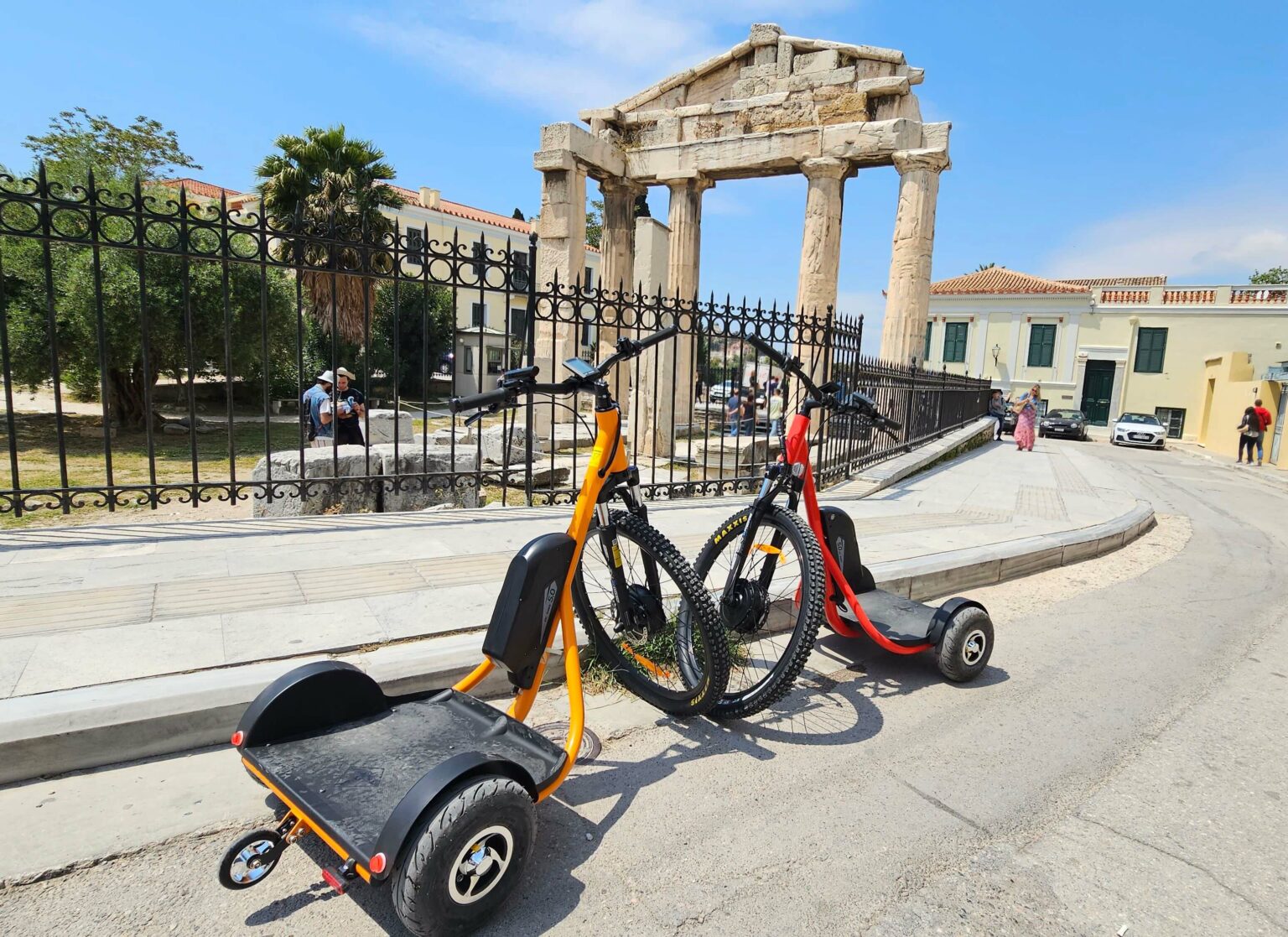
The neighborhood has no shops selling tourist goods, no organized tour starting points, and no admission fee or gate. This means you can arrive on foot from Plaka at any hour. Comfortable walking shoes are essential, as the streets are cobblestone and steep in places. Bring water, especially in summer, because there are no convenient water fountains or shops. A paper map of Athens can be useful, though expect it to feel less reliable than you might hope once you are inside the narrow lanes. Many visitors find that combining a self-guided walk through Anafiotika with an organized tour elsewhere in Athens - perhaps on an electric trike that covers larger distances and more of the city's geography - allows them to see both the intimate, hidden corners and the famous ancient sites without exhaustion.
The real gift of Anafiotika is that it asks almost nothing of you except time and a willingness to be a little bit lost. In a city that can feel overwhelming with history and monuments and scale, it offers the opposite: a space that is small, quiet, human-proportioned, and real. It is worth finding.
Frequently asked questions
Where exactly is Anafiotika in Athens?
Anafiotika sits on the northeastern slope of the Acropolis, nestled between Plaka to the south and Monastiraki to the west. It's a small pocket of the city that takes less than twenty minutes to walk through, though its winding streets make it easy to get pleasantly lost.
Why does Anafiotika look like an island village?
In the 1840s, builders from the tiny island of Anafi in the Aegean came to Athens seeking work and built houses using their home island's style and layout. They recreated the Cycladic architecture, narrow lanes, and even the social rhythm of their original community, creating a transplanted island neighborhood that has survived to this day.
Is Anafiotika still a real neighborhood where people live?
Yes, local residents have lived in Anafiotika for generations and many still do. You'll see laundry hanging between buildings, hear music from open windows, and find small shops that serve locals rather than tourists, giving the area an authentic, lived-in quality.
What can you do in Anafiotika?
Anafiotika is best explored on foot by wandering its maze-like streets and discovering hidden details: cats on doorsteps, flower-filled windows, hidden tavernas, and unexpected staircases leading to terraces with views of the Parthenon. The neighborhood itself is the main attraction.
Why is Anafiotika hard to navigate with GPS?
The streets loop back on themselves, twist tightly, and contain many dead ends. GPS signals bounce between the whitewashed buildings and don't work reliably. This disorientation is actually part of the experience - getting lost in Anafiotika is how you discover its charm.
What is the architecture style of Anafiotika like?
The houses are small, typically two stories, with whitewashed walls, colorful painted doorways, and internal courtyards. This Cycladic style features practical design - the whitewash reflects heat, narrow lanes provide shade, and courtyards allow air circulation - that has weathered remarkably well over time.