
Somebody in every travel group eventually pulls up a map, frowns, and asks why there are two agoras marked in the center of Athens. Are they the same place with two names? Do you need to see both? Is one just a smaller, sadder version of the other? It's a fair question, and honestly, most visitors never get a clear answer before they arrive, which means they either skip one entirely or wander into both without knowing what they're actually looking at.
The confusion is understandable. Both sites sit a short walk from Monastiraki, both are ruins with columns and stone paths, and both have "agora" in the name, which in Greek simply means marketplace or public gathering space. But they were built centuries apart, for different purposes, under different rulers, and knowing the difference changes how you experience them. This isn't really about ancient history trivia - it's about deciding where to spend your limited hours in Athens and what to expect when you get there.
What Was the Ancient Agora, Really?
The Ancient Agora is the older of the two, dating back to around the 6th century BC, and it was the beating heart of civic life in classical Athens. This is where democracy itself took shape - where citizens gathered to vote, philosophers like Socrates argued in public, and merchants sold everything from olive oil to sandals. Walking through it today, you pass the Temple of Hephaestus, one of the best-preserved ancient Greek temples anywhere, and the reconstructed Stoa of Attalos, which now houses a small museum worth ten minutes of anyone's time.
What makes the Ancient Agora feel different from other ruins in the city is its scale and openness. It's a sprawling, green, relatively shaded site where you can actually picture a functioning city - not just a temple standing alone, but streets, meeting halls, and shops. Families often find it more comfortable than the Acropolis itself, since there's less climbing and more flat, walkable ground.
And the Roman Agora - Why a Second One?
By the 1st century BC, the old marketplace had gotten crowded, and the Romans, who by then controlled Athens, decided the city needed a new commercial hub. So they built the Roman Agora just a short walk northeast, funded partly by Julius Caesar and Augustus. It's smaller and more contained, centered around the Tower of the Winds, an octagonal marble structure that once functioned as a kind of ancient weather station and water clock - genuinely one of the more clever pieces of engineering from antiquity.
The Roman Agora feels different the moment you walk in. It's tighter, quieter, and less visited, which some travelers actually prefer. Where the Ancient Agora sprawls, the Roman Agora is compact enough to see properly in twenty or thirty minutes, making it an easy add-on rather than a half-day commitment.
The Core Differences, Side by Side
Age and Purpose
The Ancient Agora was the social and political core of classical Athens, built by Athenians for Athenians. The Roman Agora came later, built under Roman rule primarily as a commercial and trading center once the old marketplace overflowed. One reflects the birth of democratic life, the other reflects a practical solution to urban growth under empire.
Size and What You'll See
The Ancient Agora is considerably larger, with more ruins spread across open ground, plus that standout temple and the museum inside the Stoa. The Roman Agora is smaller and more focused, built around the Tower of the Winds and the remains of a Roman-era market gate. If you only have time for one and you want breadth and a real sense of ancient city life, the Ancient Agora wins. If you're short on time or already Acropolis-weary, the Roman Agora offers a quick, satisfying stop.
Ticketing
Both sites are usually included in the combined Acropolis ticket, which also covers Kerameikos, the Temple of Olympian Zeus, and a few other spots - so in practice, most visitors end up seeing both without paying extra, which removes one common objection before it even comes up.
Do You Really Need to See Both?
Here's the honest answer: not necessarily, but it's worth trying if your schedule allows it. They're close enough together - separated mostly by the lively streets of Monastiraki, where the flea market spills out on weekends - that seeing both in one outing rarely feels like a detour. Plan on roughly ninety minutes for the Ancient Agora and thirty for the Roman Agora, with a coffee break somewhere in Plaka in between.
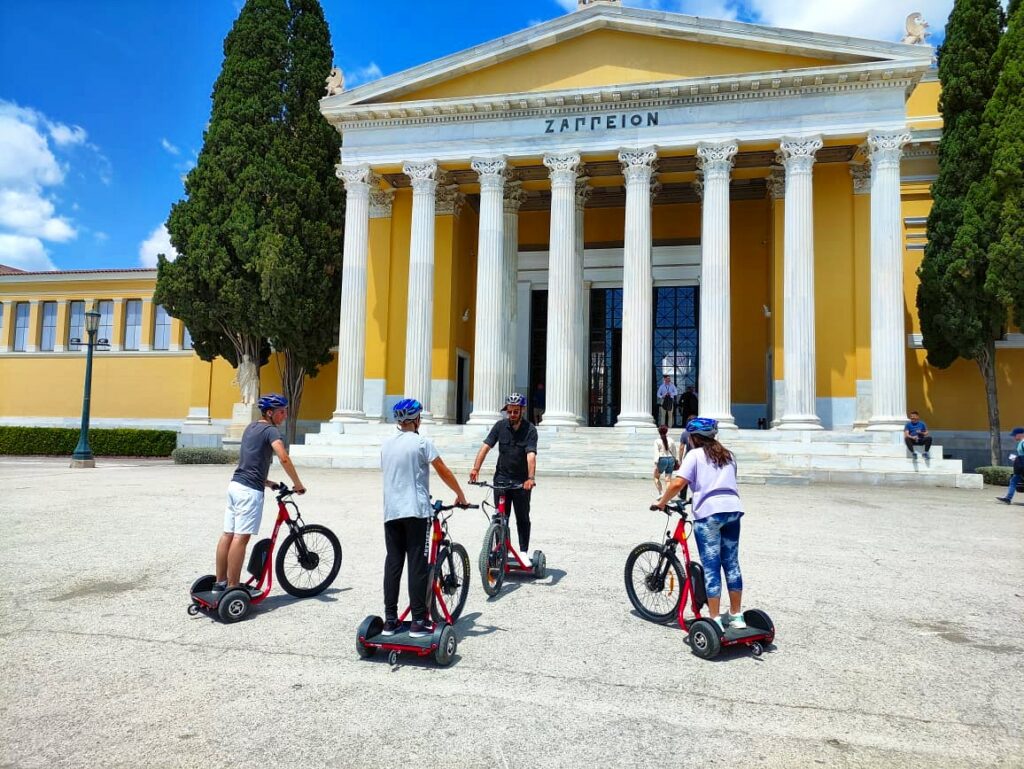
If you're traveling with young children or anyone who tires from walking, doing both back to back on a hot afternoon can be a lot. This is where covering ground more efficiently matters - some visitors break up the walking with an electric trike tour that loops past both agoras along with the Acropolis viewpoint and Ancient Agora, letting kids and grandparents alike see the sites without the exhaustion of trekking uphill in the Athens sun.
A Common Mistake Worth Avoiding
The most frequent mistake is assuming the Roman Agora is a smaller, lesser copy of the Ancient Agora and skipping it altogether. In reality, it tells a completely different chapter of the city's story - the shift from Greek democracy to Roman administration - and the Tower of the Winds alone is worth the short walk. Skipping it because "we already saw an agora" means missing a genuinely unique structure found nowhere else in Athens.
The opposite mistake also happens: tourists rush through the Ancient Agora in fifteen minutes because they've confused it with the smaller Roman site and expect it to be over quickly. Bring water, wear a hat, and give it the time it deserves - it's one of the more rewarding, less crowded major sites in the city center.
Nearby, While You're There
Once you've seen both agoras, you're perfectly positioned to wander into Monastiraki flea market for a bit of browsing, or climb toward Anafiotika, the tiny island-style village tucked beneath the Acropolis, where whitewashed houses and narrow lanes feel like a different country entirely. Plaka's tavernas are close enough for a coffee or an early lunch, and if you time your visit for late afternoon, Filopappou Hill nearby offers one of the best sunset views over the ancient sites without the crowds of the Acropolis itself.
Whichever route you take, the two agoras together give you something most single monuments can't: a sense of how the city actually functioned, first as a democracy and later as a Roman provincial capital, layered right on top of each other in the same few blocks of downtown Athens.
Frequently asked questions
Which agora should I visit if I only have time for one?
The Ancient Agora offers more to see and a stronger sense of ancient city life, making it the better choice if you must pick one. However, both sites are usually included on the combined Acropolis ticket, so most visitors see both without paying extra.
How long does it take to visit each site?
Plan roughly ninety minutes for the Ancient Agora to properly explore its temples, colonnades and museum. The Roman Agora is more compact and takes about thirty minutes to see thoroughly.
What's the main difference between the two agoras?
The Ancient Agora was the heart of classical Athenian democracy and civic life from the 6th century BC onward. The Roman Agora, built later when Rome controlled Athens, was primarily a commercial marketplace built to handle overflow from the older site.
Are the agoras close to each other?
Yes, they're separated mainly by the streets of Monastiraki neighborhood, where you'll find the flea market on weekends. This proximity makes it easy to visit both in a single outing without major detours.
What's worth seeing at each location?
The Ancient Agora features the Temple of Hephaestus, one of the best-preserved ancient Greek temples, plus the reconstructed Stoa of Attalos with a museum. The Roman Agora centers on the Tower of the Winds, a remarkable octagonal marble structure that functioned as an ancient weather station and water clock.