
Somewhere around the second day in Athens, most visitors hit a wall of temples. They have seen the Acropolis, maybe circled the Parthenon twice for photos, and now a friend or a guidebook is pushing them toward "one more ancient site" a short walk downhill. At that point, tired feet start asking a fair question: is the Ancient Agora actually worth the extra stop, or is it just more old stones with a higher price tag on your energy?
It is a reasonable hesitation. Athens is dense with ruins, and not every one of them rewards the walk in the same way. Some are best appreciated from a photo online. Others change how you understand the whole city once you have stood in them. The trick is knowing which category the Agora falls into before you commit your afternoon, especially if you are traveling with kids who have already declared themselves "done with ruins" for the day, or you are trying to fit everything into a tight two day itinerary.
What the Ancient Agora Actually Was
The word "agora" gets translated loosely as "marketplace," which undersells it considerably. This was the actual center of daily life in classical Athens - not a museum piece, but the working heart of the city. People gathered here to argue politics, buy olive oil, watch philosophers hold court, and vote on the decisions that shaped the ancient world.
Socrates spent time here, cornering strangers with questions they did not particularly want to answer. The foundations of Western democracy, in a very literal sense, were laid a few steps from where tour groups now stand taking photos. Walking through the site with that context in mind changes it from "another pile of ruins" into something closer to standing in the room where things actually happened.
That contrast matters more here than at most sites in Athens. The Acropolis impresses through scale and silhouette - it is built to be seen from a distance, admired as a shape against the sky. The Agora works the opposite way: it rewards proximity, imagination, and a guide who can point at an empty patch of ground and explain why it used to matter.
The Temple of Hephaestus Alone Justifies the Walk
Most people expect ruins - broken columns, low walls, the outline of buildings you have to imagine. What catches visitors off guard is the Temple of Hephaestus, sitting on a low hill at the edge of the site, remarkably intact. It is often called the best-preserved ancient Greek temple in existence, and standing in front of it, that claim feels believable rather than exaggerated.
Unlike the Parthenon, which is still partially wrapped in scaffolding and reconstruction work, the Temple of Hephaestus gives you the full picture without mental patchwork required. Its columns are complete, its roofline intact, and the proportions are the kind that make you understand why ancient architects are still studied today. Photographers in particular tend to linger here longer than planned - the light in late afternoon does something to the marble that is hard to walk away from.
How the Agora Compares to the Crowds Up Top
The Acropolis in high season can feel less like a historical encounter and more like a queue with a view. Tour groups stack up at the entrance gate, everyone is angling for the same photo spot, and the heat radiating off the marble in July does not help anyone's mood. The Agora, sitting just below, tends to be dramatically quieter.
That quiet is not a downgrade. It means you can actually stand still in front of the Stoa of Attalos - a reconstructed colonnade that now houses a small museum - without being jostled. It means children have room to run a little, which matters more than guidebooks admit when you are traveling with a six or seven year old who has opinions about how many old buildings a person can look at in one day. Families doing Athens with limited mobility or younger kids often find the Agora's flatter, shadier paths more manageable than the steep, sun-exposed climb to the Acropolis itself.
"But We Already Saw the Acropolis - Isn't That Enough?"
This is the honest objection, and it deserves an honest answer: it depends on what you came to Athens for. If the goal was one dramatic photo and a box checked, then yes, the Acropolis alone covers that. But if there is any curiosity about how ancient Athenians actually lived, argued, traded, and voted, the Agora fills in a picture the Acropolis does not.
Think of it this way - the Acropolis was the city's temple complex, elevated and somewhat removed from daily life, reserved for religious and ceremonial purposes. The Agora was where ordinary Athenians actually spent their days. Visiting only the first is a bit like touring a cathedral and skipping the town square that grew up around it. The two sites were designed to be understood together, not as substitutes for one another.
Timing It Right in the Summer Heat
Athens in summer punishes anyone who tries to see everything between noon and 3pm. The Agora has more shade than most ancient sites in the city, thanks to pine trees scattered across the grounds, but early morning or the last two hours before closing are still the smarter windows. Arriving right when it opens also means fewer people between you and the Temple of Hephaestus for photos.
Combining it with a nearby stop in Monastiraki or Plaka afterward, once the heat has settled, tends to work better than trying to cram both a temple and a shopping detour into the same scorching midday hour.
Seeing It Without Wearing Yourself Out
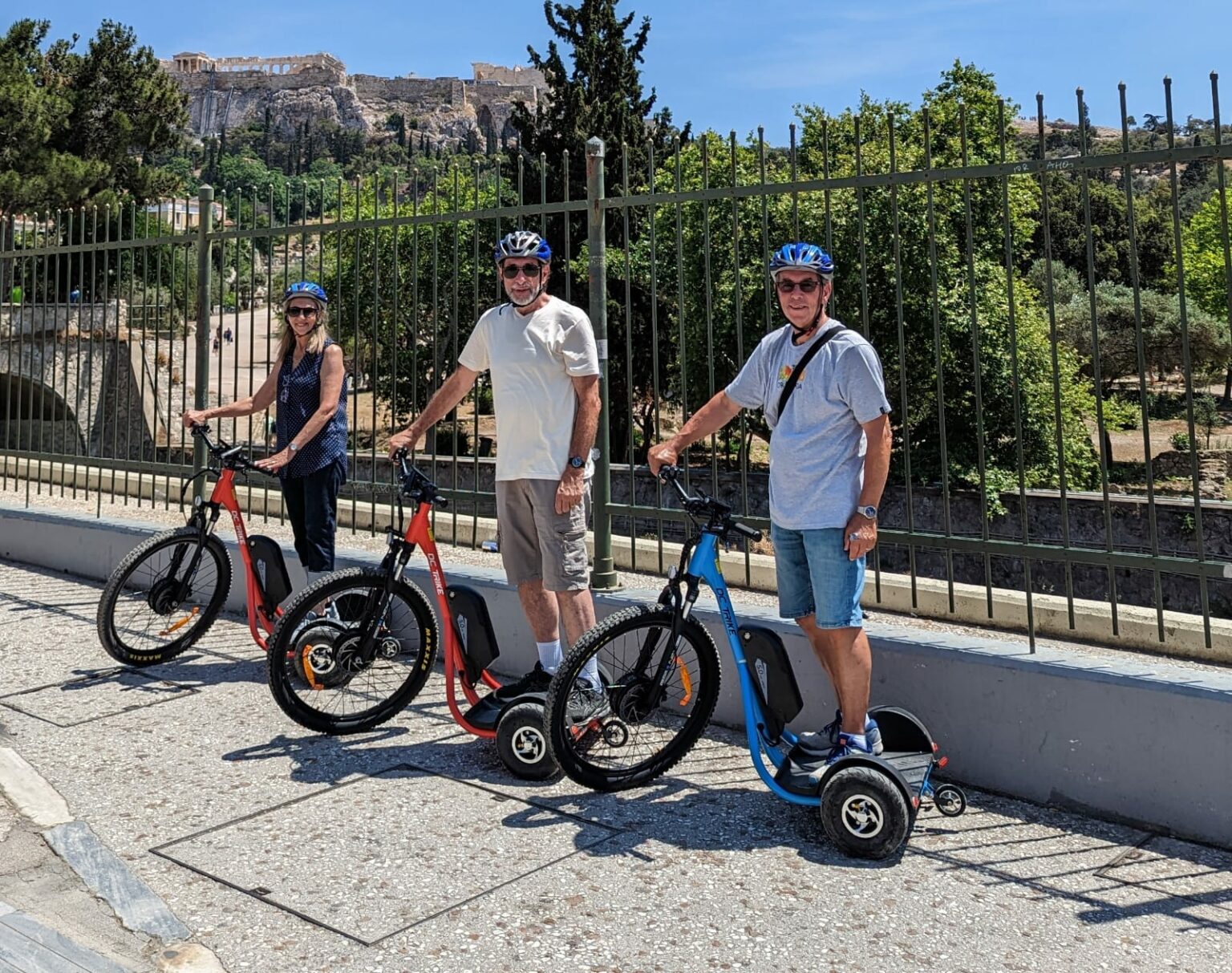
For visitors already tired from a few days of Athens walking, the idea of one more archaeological site can feel like a chore rather than a highlight. This is where a guided e-trike tour tends to change the equation - covering the distance between the Acropolis area, the Agora, and the surrounding neighborhoods without the legwork, while a local guide fills in the history that makes the empty foundations mean something. Ayo Tours Athens runs itineraries that loop through exactly this stretch of the ancient city, pairing the ride with the kind of context a plaque on a fence post rarely provides.
Whether you walk it, ride it, or hire a guide to talk you through it, the Ancient Agora earns its place on the itinerary. It is not a mandatory stop in the way the Acropolis is, but it is the piece that makes the rest of ancient Athens make sense - the marketplace, the courtroom, and the philosopher's corner, all in one quiet, shaded field below the hill everyone already came to see.
Frequently asked questions
What is the Ancient Agora and why does it matter?
The Agora was the working center of classical Athens where citizens gathered to debate politics, trade, and vote on decisions that shaped Western democracy. It's where Socrates spent time questioning people and where the foundations of democratic governance literally took place.
How long does it take to visit the Ancient Agora?
Most visitors spend 1.5 to 2 hours at the site, depending on whether you hire a guide and how much time you spend at the Temple of Hephaestus and the Stoa of Attalos museum. A shorter visit can be done in about an hour if you move through quickly.
Is the Ancient Agora crowded like the Acropolis?
No. The Agora tends to be dramatically quieter than the Acropolis, especially during peak season. This makes it easier to appreciate the ruins at your own pace, move freely, and actually stand still to absorb the history without being jostled by tour groups.
What makes the Temple of Hephaestus special?
It's one of the best-preserved ancient Greek temples in existence, with complete columns and an intact roofline. Unlike the partially reconstructed Parthenon, the Temple of Hephaestus gives you the full picture of classical Greek architecture without needing to imagine missing pieces.
Is the Ancient Agora good for families with young children?
Yes, especially compared to the Acropolis. The paths are flatter and shadier, there's more space for children to move around, and the quieter atmosphere makes it less overwhelming. Kids who are tired of ruins often find it more manageable than other ancient sites.