
There's a moment every parent recognizes, usually around the second museum of the day, when a child stops looking at the ancient stones and starts looking at their shoes. It's not boredom exactly, more like a small system overload - too much walking, too much heat, too many "just five more minutes" promises that turned into forty. Athens is a spectacular city for families, but it does not automatically know how to be one. That part takes some planning, and a bit of local knowledge about what actually works when you have kids in tow.
The good news is that Athens with kids does not have to mean choosing between the ruins you came to see and a trip your children will tolerate rather than enjoy. The city has enough texture - food, parks, water, gadgets, street life - that a family itinerary can feel like an adventure rather than a checklist. The trick is knowing which parts of the classic Athens experience to keep, which to shorten, and where to add something that belongs entirely to the kids.
Rethink the Acropolis Visit, Don't Skip It
Every family debates this one: is the Acropolis worth it with young children? The honest answer is yes, but not the way most adults would do it alone. Climbing in the midday sun with a six-year-old asking for the tenth time how much further is a recipe for tears, usually from more than one member of the family. Early morning or late afternoon visits cut both the heat and the crowds, and give kids enough energy to actually look up at the columns instead of down at the ground.
Framing helps too. Telling a child "we're going to see where a giant stone temple to a goddess still stands after 2,500 years" lands better than a lecture on Doric versus Ionic columns. Some families skip the summit entirely and enjoy the view from below, from the Areopagus rock or a shaded spot near the Ancient Agora, which is itself a gentler, greener, and often more kid-friendly stop than the main site - fewer crowds, more shade, and actual open space to walk around rather than queue.
Build the Day Around Food, Not Just Sights
Ask any parent what actually saved a family trip and food usually comes up before any monument does. Athens makes this easy. A souvlaki stop in a square in Plaka, with kids comparing pita wraps and parents debating souvlaki versus gyro like it's a serious philosophical question, does more for morale than another guided explanation of ancient history. Loukoumades - warm honey doughnuts dusted with cinnamon - tend to work as a bribe, a reward, and a genuine highlight all at once.
Street food in general is the family traveler's best friend here, since it's fast, cheap, and forgiving of picky eaters. A market wander through Monastiraki, with its stalls, odd souvenirs, and constant hum of activity, doubles as entertainment and lets kids move at their own pace instead of being marched from placard to placard. Building meals into the itinerary as events rather than interruptions changes the whole tone of the day.
Choose Attractions With Built-In Space to Move
Children do not do well standing still and reading informational plaques, however beautifully written. What works better are sites with room to explore. The Panathenaic Stadium, the all-marble stadium where the first modern Olympics were held in 1896, tends to be a hit precisely because kids can run its length, sit in the stands, and imagine themselves as sprinters, without a guide needing to keep everyone quiet.
The National Garden, tucked behind the Greek Parliament, is another good pressure valve - shaded paths, turtles in small ponds, the occasional peacock, and enough open ground for kids to stop being tourists for twenty minutes and just be children. Mixing one "big sight" with one "open space" per day keeps energy levels manageable and avoids the afternoon meltdown that so many families know too well.
What About Kids Who Don't Like Walking?
This is the real question underneath most family itinerary struggles, and it deserves an honest answer rather than a vague reassurance. Some children walk for hours without complaint. Many do not, especially in Athens summer heat, on uneven pavements, after the novelty of "ancient Greece" has worn off by day two. Pretending otherwise usually ends with a carried, cranky five-year-old and two exhausted parents.
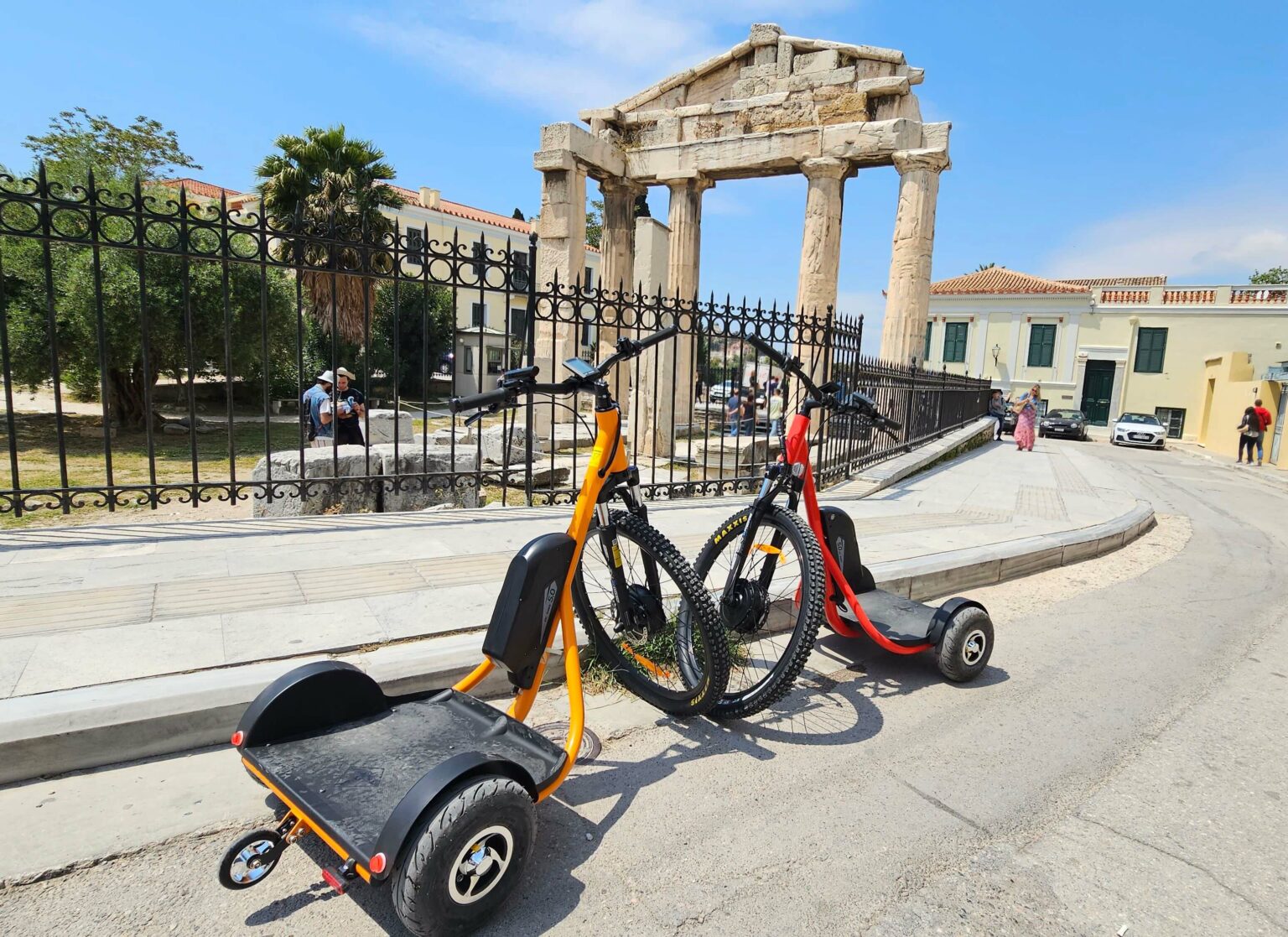
This is where alternatives to walking earn their keep. Guided e-trike tours, for instance, let children as young as five or six ride alongside a parent on a stable, electric-powered three-wheeled trike, with no pedaling and no balancing required, covering ground that would otherwise mean hours on foot. A tour like the ones run by Ayo Tours Athens moves through both ancient sites and modern neighborhoods at a pace that keeps kids engaged rather than dragging, with a local guide doing the explaining so parents can actually enjoy the ride too. It turns getting between sights into part of the fun, rather than the part everyone dreads.
Two Days Is Enough to Get the Highlights Right
Families sometimes assume Athens needs a week to do justice with children, and then panic when the trip is really two or three days. A tighter itinerary is not a failure - it just needs sharper choices. Day one might pair the Acropolis area, kept short and early, with a relaxed lunch and the National Garden. Day two could mix Ancient Agora, a food-focused wander through Plaka, and an e-trike or similar tour that covers Syntagma, the Temple of Olympian Zeus, and the stadium without exhausting small legs.
Two full days done well beat four days done in a rush, especially with kids, who remember the loukoumades and the trike ride far more vividly than a third temple.
Evenings Don't Have to End Early
Families often assume nightlife is off the table once children are involved, but Athens evenings can be gentle rather than late. A rooftop dinner with an Acropolis view as the lights come on, a slow walk through a lit-up Plaka, or ice cream in a square while musicians play nearby all count as "what to do in the evening" without anyone needing a babysitter or a late bedtime disaster.
The city softens after sunset - cooler air, warm lighting on old stone, a slower pace generally - which suits families just as well as it suits couples looking for a romantic view.
There's no single right way to do Athens with kids, and any parent who tells you otherwise probably had an unusually cooperative child. What tends to work, across most families, is shorter bursts of sightseeing, food built into the plan rather than squeezed around it, open spaces to burn energy, and at least one easier, more playful way to cover distance when little legs get tired. Get that balance right, and Athens stops being a city you survive with children and becomes one they actually ask to go back to.
Frequently asked questions
Is the Acropolis worth visiting with young children?
Yes, but timing matters greatly. Early morning or late afternoon visits reduce heat and crowds, giving kids energy to actually look at the monuments. Some families skip the summit and enjoy views from below, near the Ancient Agora, which is quieter and shadier.
What should we eat when visiting Athens with children?
Street food and markets are ideal for families. Souvlaki, loukoumades (honey doughnuts), and casual pita stops work better for morale than formal dining. Exploring Monastiraki market lets kids move at their own pace while experiencing local food culture.
Which Athens attractions work best for kids?
Sites with open space and room to move suit children better than those requiring quiet observation. The Panathenaic Stadium lets kids run and explore freely, while the National Garden offers shade, turtles, and space to relax between sightseeing.
How do we handle children who don't like walking long distances?
E-trike tours are a practical solution for families tired by heat and uneven pavements. Stable, electric-powered, and suitable for children from age five upwards, they cover major sights without the fatigue of all-day walking in summer conditions.
How should we plan our daily itinerary with kids in Athens?
Mix one major sight with one open space or park per day to keep energy manageable. Build meals into the schedule as events rather than quick breaks, and visit museums or crowded sites early in the day before heat and fatigue set in.