
Ask any local when Athens really comes alive, and they will probably tell you it's not at 10am with the tour buses lining up at the Acropolis - it's around 8pm, when the heat finally breaks and the whole city seems to walk outside at once. Tavernas fill up, string lights flick on over pedestrian streets, and the floodlit rock of the Acropolis turns a soft honey-gold against the sky. Visitors who treat Athens as a daytime-only destination end up missing the half of it that Athenians themselves love best.
The tricky part is that evening in Athens does not come with the same obvious checklist as the morning. Everyone knows to see the Acropolis and the Ancient Agora before lunch. But what happens after the museums close and the sun starts dropping behind Lycabettus Hill is less obvious, especially for first-time visitors trying to figure out where to eat, whether it is safe to walk around, and what is actually worth staying up for.
Why Athens After Dark Feels Like a Different City
During the day, the Acropolis and its surrounding sites can feel almost overwhelming - crowds bunching at the entrance, sun beating down, everyone hunting for shade at the same three spots. At night, that pressure disappears. The rock itself is illuminated from sunset until around midnight, visible from dozens of rooftop bars and terraces across the city, and it looks less like a monument on a checklist and more like something out of a painting.
Temperature is the other big shift, especially in summer. Athens in the height of July and August can hit uncomfortable highs by early afternoon, which is exactly why so many residents shift their real day toward the evening. Shops that closed for a midday break reopen, restaurant terraces fill in slowly starting around 8:30, and the streets around Plaka and Monastiraki take on an entirely different rhythm - quieter cars, louder conversation, the smell of grilled meat drifting from open kitchens.
Where to Watch the Sunset Before Everything Else Starts
Timing an evening well usually starts with picking the right sunset spot. Areopagus Hill, the rocky outcrop just below the Acropolis, is free, unmarked on most maps as anything special, and packed with people sitting on the smooth stone at golden hour with a drink from a nearby kiosk. Lycabistus Hill, reachable by funicular, gives a wider view over the whole basin of the city, all the way to the port of Piraeus on a clear evening.
For something with a bit more polish, several rooftop bars around Monastiraki and Thissio are built specifically around the Acropolis view, with reservations recommended on weekends. It is worth remembering that these spots get busy fast once the light starts changing, so arriving thirty minutes before actual sunset usually means an easier time finding a seat.
What to Eat: Dinner Rituals Athenians Actually Follow
Dinner in Athens rarely happens before 9pm among locals, and restaurants know it - many do not really fill up until closer to 10. This is worth keeping in mind for anyone used to eating at 6 or 7, since arriving early sometimes means having the whole place to yourself, which is not necessarily a bad thing if you want a quiet table.
The eternal question of souvlaki versus gyro comes up constantly, and the honest answer is that they are cousins rather than rivals - souvlaki is skewered grilled meat, gyro is the shaved rotisserie version wrapped in pita with tomato, onion, and tzatziki. Both are best eaten standing at a counter in Monastiraki, not as a sit-down meal, and both cost a few euros. For a fuller dinner, Plaka's narrow streets hold dozens of tavernas with rooftop seating, though prices there run higher precisely because of the view, so wandering one or two streets further inland toward Anafiotika often turns up quieter, better-value spots with almost the same scenery.
Is It Safe and Easy to Walk Around at Night?
Central Athens - Plaka, Monastiraki, Syntagma, Thissio - is well lit, busy with pedestrians well past midnight, and generally considered safe for tourists, including solo travelers and families with children in tow. The main areas worth avoiding late at night are less about danger and more about simply having nothing open, like some quieter residential streets away from the center.
That said, cobblestones and uneven pavement are a real consideration after dark, especially around the older parts of Plaka where lighting is softer and more decorative than practical. Comfortable shoes matter more at night here than they do during the day, and anyone with mobility concerns should stick to the main pedestrian boulevards rather than the smaller side alleys, which tend to have steps and steep inclines that are harder to judge in low light.
Evening Activities Beyond Dinner and Drinks
Not every evening needs to revolve around a restaurant table. The Acropolis Museum stays open late on Fridays until 10pm, and walking through its glass floors and ancient artifacts with far smaller crowds than daytime visits is a genuinely different experience. The Panathenaic Stadium, the all-marble stadium built for the first modern Olympics, is not usually open at night, but walking past its lit exterior on the way to dinner in the nearby neighborhoods is worth the short detour.
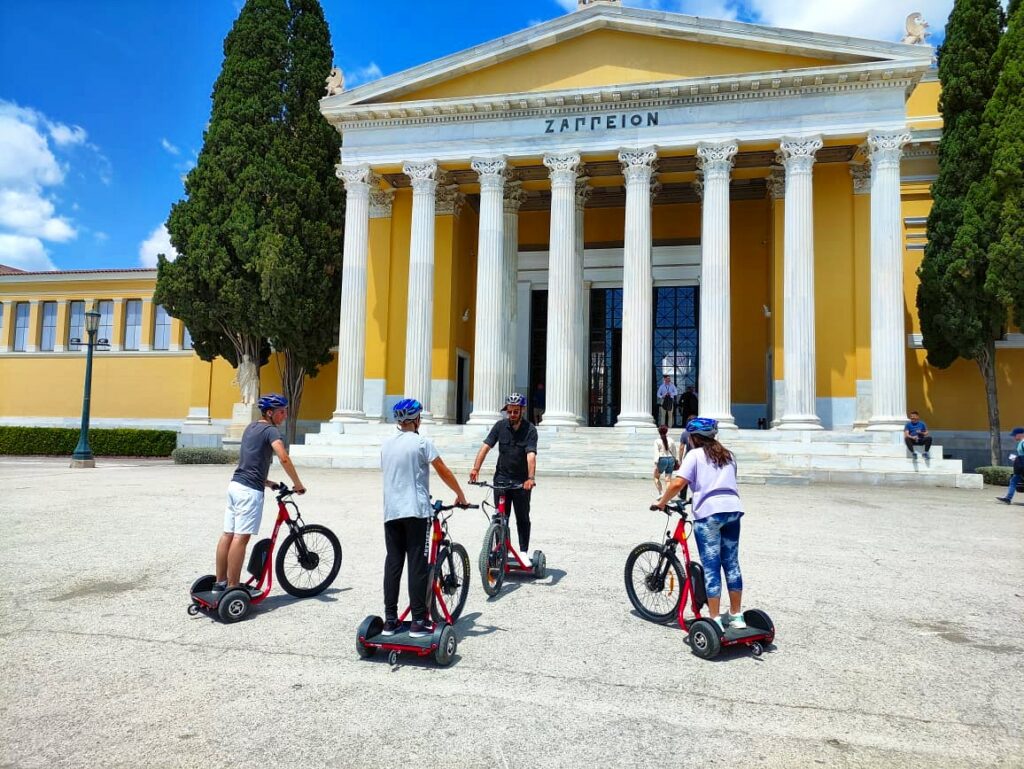
For those who want to keep moving rather than sit still, an evening e-trike tour is worth considering. Seeing the illuminated Acropolis, Temple of Olympian Zeus, and the quieter backstreets of Plaka from a stable three-wheeled electric trike, guided by someone who actually grew up in the city, takes the guesswork out of navigating unfamiliar streets after dark and adds a bit of local storytelling most visitors would otherwise miss entirely. Companies like Ayo Tours Athens run these routes specifically timed around sunset and the evening light show on the rock, which solves the "where do we even start" problem that trips up a lot of first-time evening planners.
Common Mistakes Visitors Make After Dark
The most frequent misstep is treating evening as an afterthought - booking dinner at 7pm because that felt like a normal time back home, then wondering why the restaurant feels half-empty and slightly rushed. Waiting even an hour changes the entire atmosphere. Another common mistake is assuming everything shuts down early; in reality, central Athens often stays lively until 1am or later, particularly on weekends.
Some visitors also try to cram too much into one evening - sunset viewpoint, full dinner, a bar, and a late walk - and end up exhausted rather than enjoying any of it. Picking two things and doing them properly, rather than four things rushed, tends to leave people with better memories and fewer sore feet.
There is no single correct way to spend an Athens evening, and that is really the point. Some nights call for a quiet rooftop and a glass of Assyrtiko watching the floodlights hit the Parthenon; others are better spent wandering Monastiraki's flea market stalls before they close, or grabbing a late gyro and finding a bench with a view. What matters most is simply giving the evening its due, rather than treating it as leftover time after the day's sightseeing is done - because in Athens, some of the best moments only really start once the sun goes down.
Frequently asked questions
Is it safe to walk around Athens at night?
Central Athens including Plaka, Monastiraki, Syntagma and Thissio is well lit and busy with pedestrians well past midnight, making it generally safe for tourists, families and solo travelers. Avoid quieter residential areas with little activity, and wear comfortable shoes since older streets have uneven pavement that is harder to navigate in lower light.
When do restaurants open for dinner in Athens?
Dinner in Athens typically starts around 9pm or later, with many restaurants not filling up until closer to 10pm. If you prefer eating earlier, arriving at 6 or 7pm means you may have a quiet table to yourself, though the restaurant may not be busy.
What is the best time to watch the sunset in Athens?
Arrive about thirty minutes before sunset to secure a good spot. Popular free viewpoints like Areopagus Hill and Lycabettus Hill fill quickly once the light starts changing. Rooftop bars around Monastiraki and Thissio offer more formal seating but require weekend reservations.
What should I eat when out at night in Athens?
Souvlaki (grilled skewered meat) and gyro (shaved rotisserie meat with pita and toppings) are cheap street options best eaten at a counter in Monastiraki. For a fuller meal, head to tavernas in Plaka or the quieter streets toward Anafiotika, where you get rooftop views and better value than the main tourist spots.
Why does Athens feel different at night compared to the day?
Evening brings cooler temperatures, fewer crowds, and a shift in local rhythm. The floodlit Acropolis becomes a stunning focal point visible from across the city, shops reopen after midday breaks, and the focus moves from rushed sightseeing to relaxed socializing and dining.