
Every visitor to Athens ends up in Plaka within the first day or two, usually without much of a plan. Someone mentions it is "the old part of town, very pretty, lots of tavernas," and that is more or less the extent of the briefing. Then you arrive, the streets narrow and twist in ways that make no sense on a map, and you realize you have no idea whether you are looking at something two thousand years old or two hundred, or whether the shop selling "handmade" leather sandals is worth stopping at or best walked past.
This confusion is not really your fault. Plaka is dense in the way old neighborhoods tend to be dense - layers of Ottoman-era houses, neoclassical mansions, Byzantine churches and ancient ruins all packed into a few square blocks below the Acropolis. There is no single entrance, no ticket booth, no obvious starting point. You just sort of fall into it, usually from Monastiraki or Syntagma, and hope the wandering leads somewhere good.
It usually does, actually. But knowing what you are looking at, and which corners reward a slower look, makes the difference between a pleasant blur of photos and an afternoon you actually remember.
What makes Plaka worth the detour in the first place
Plaka survived the wave of demolition that reshaped much of central Athens in the 1950s and 60s, when older buildings across the city were torn down for apartment blocks. A preservation order in the 1980s locked in its low-rise character, which is why it still feels like a village folded into a capital city. Bougainvillea spills over balconies, cats sleep on marble steps that are older than most countries, and the streets are narrow enough that cars mostly give up trying.
That survival is the whole point of visiting. You are not looking for one specific monument so much as walking through a neighborhood that kept its shape while everything around it changed. It rewards slow movement more than a checklist, though there are a handful of spots worth deliberately aiming for.
Anafiotika, the village inside the city
Climb toward the base of the Acropolis rock and the streets suddenly shrink again, this time into something that looks transplanted from a Cycladic island. Anafiotika was built by stonemasons from the island of Anafi who came to Athens in the 1800s to work on King Otto's palace, and they built their homes in the style they knew - whitewashed walls, blue shutters, narrow stepped lanes with no cars and barely room for two people to pass.
There are no grand facts to recite here, no dates to memorize. The appeal is purely atmospheric: a quiet corner with laundry drying overhead and a view that opens suddenly onto the city below. It is one of those spots that photographs well without any effort, which explains why it shows up often in Athens photography roundups, but it is worth visiting even with your phone in your pocket.
The churches most people walk straight past
Plaka has an unusual concentration of small Byzantine churches, many of them easy to miss because they sit below street level or tucked between shopfronts. The Church of Kapnikarea, right on Ermou Street, is the most famous example - an 11th century structure that traffic and pedestrians simply flow around, since the street was built up higher over the centuries and the church stayed where it was.
These buildings rarely have crowds or entry fees, and stepping inside for even two minutes gives a different sense of Athens than the marble grandeur of the Acropolis. It is a smaller, quieter kind of history, and it tends to stick with people precisely because nobody made a fuss about pointing them toward it.
Is the Ancient Agora part of Plaka, or something separate?
Technically the Ancient Agora sits just at Plaka's edge, bordering Monastiraki, but most people experience it as one continuous stretch of walking. This was the heart of public life in classical Athens - the marketplace, the courts, the spot where Socrates apparently annoyed people into philosophy. The well-preserved Temple of Hephaestus sits at one end, and the reconstructed Stoa of Attalos now houses a small museum.
The Ancient Agora is genuinely worth visiting on its own, not just as a stop on the way to somewhere else, and it is far less crowded than the Acropolis itself. Combined tickets covering both sites are usually the better deal if you are doing a full day of ancient Athens.
Where the tourist traps actually are
Not every corner of Plaka deserves equal attention, and it helps to know where the traps sit. The main pedestrian strip near Adrianou Street is lined with restaurants that hand out laminated multilingual menus and station a host outside to wave you in - fine in a pinch, but rarely where a local would choose to eat. A short walk uphill or one street over usually turns up quieter tavernas with better food and lower prices, simply because they are not competing for foot traffic.
The same logic applies to souvenir shops. The ones directly on the busiest lanes tend to sell identical mass-produced magnets and olive-wood spoons; the smaller shops tucked into side streets are more likely to carry something actually made in Greece. It is worth asking, since sellers are usually upfront about it if you do.
Making sense of the walk without wearing yourself out
Plaka sits on a slope, and August afternoons in Athens are no joke - this is very much a beat-the-heat situation, and mornings or early evenings make for a far more comfortable visit than midday. The uphill sections toward Anafiotika involve real stairs, which is worth knowing if anyone in your group has limited mobility or is pushing a stroller.
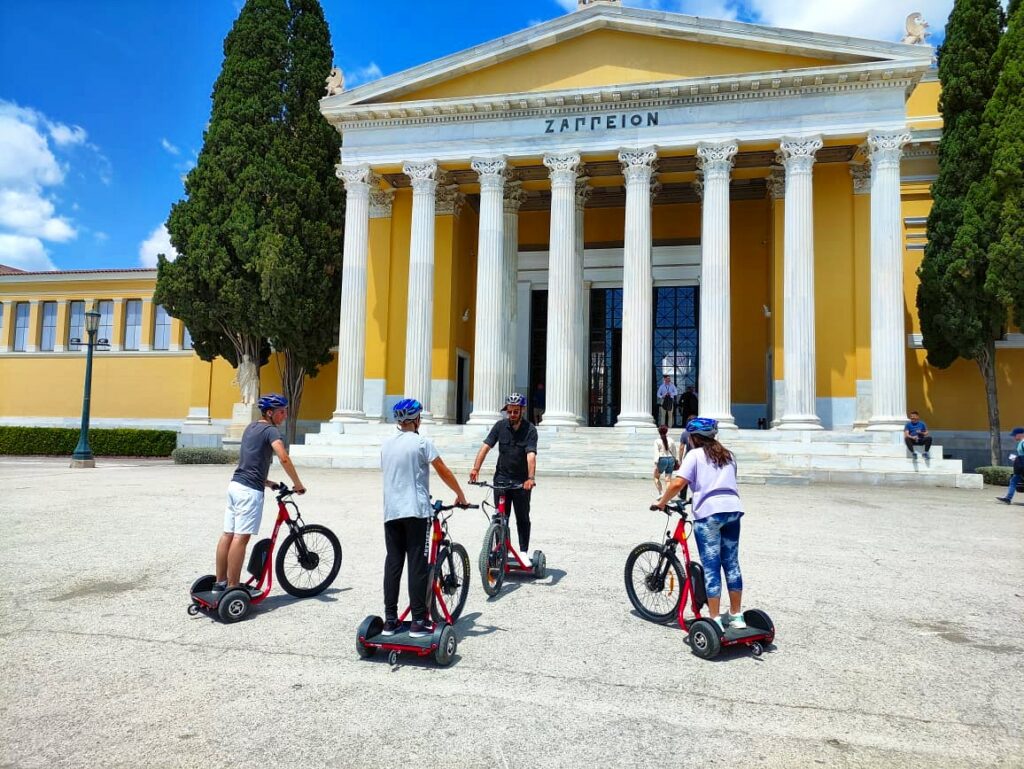
This is one reason a fair number of visitors choose to cover the flatter approach roads and the wider avenues bordering Plaka by e-trike rather than entirely on foot, saving their energy and their patience for the narrow lanes that have to be walked anyway. A guided route also helps make sense of which turns lead somewhere and which are dead ends, since the street layout genuinely defeats a lot of first-time visitors. Companies like Ayo Tours Athens run guided e-trike routes through this part of the city that combine the ancient sites with the quieter Plaka streets, which suits people who want the history explained rather than guessed at from a plaque.
A short, honest itinerary if you only have half a day
Start at the Ancient Agora if the ancient ruins interest you, then let the streets pull you uphill toward Anafiotika before the heat sets in. Duck into Kapnikarea or one of the smaller churches along the way. Save lunch for a taverna one street back from the main tourist strip, and finish with a slow coffee somewhere with a view of the Acropolis rock lit up in the late afternoon light.
None of this requires a strict schedule. Plaka rewards wandering more than any checklist ever could, and the best afternoons here are usually the ones where you got a little lost on purpose.
Plaka does not need to be conquered in an afternoon, and trying to see everything at once usually means remembering very little of it afterward. Pick two or three anchors - a church, a viewpoint, a meal - and let the rest of the neighborhood fill in around them. That is generally how the people who live here experience it too.
Frequently asked questions
What is Plaka Athens known for?
Plaka is Athens's historic old town, famous for its narrow winding streets, preserved neoclassical and Ottoman-era houses, small Byzantine churches, and village atmosphere. It survived major demolition in the 1950s and 60s, giving it a unique character that feels separate from modern Athens despite being at the city's heart.
How long should you spend in Plaka?
Most visitors spend two to four hours exploring Plaka comfortably. The neighborhood rewards slow wandering and sitting in tavernas rather than rushing through a checklist. If you combine it with the nearby Ancient Agora, budget a full afternoon or longer.
What is Anafiotika and why visit it?
Anafiotika is a distinct quarter within Plaka featuring whitewashed buildings with blue shutters, narrow pedestrian lanes and no cars. Built by stonemasons from the Cycladic island of Anafi in the 1800s, it offers a quiet, atmospheric pocket that feels like a Greek island village nestled within the city.
Are there entry fees for churches in Plaka?
Most small Byzantine churches in Plaka charge no entry fee and welcome visitors to step inside briefly. The Church of Kapnikarea, one of the most notable, sits directly on a busy street and can be visited freely during open hours.
Is the Ancient Agora part of Plaka?
The Ancient Agora sits at Plaka's edge bordering Monastiraki, though most visitors experience them as one continuous walking route. It's worth visiting as a separate site rather than just a quick stop, as it's less crowded than the Acropolis and housed important public life in classical Athens.