
A phrase learned for a trip can disappear the moment a waiter asks a follow-up question. Basic Greek phrases for travelers are still useful, though - not because visitors need to speak fluently, but because a greeting or a polite request can make everyday exchanges feel warmer and easier.
In Athens, most visitors can get by with English in hotels, busy cafés and major sights. The more practical question is where a few Greek words help, how to say them without worrying about an accent, and what to do when the other person answers in Greek. A little preparation can make the first coffee order or market stop less daunting.
Which basic Greek phrases for travelers are worth learning first?
Start with greetings and courtesy. “Yassas” means hello and is the polite form to use with strangers or a group; “efharistó” means thank you, and “parakaló” can mean please or you’re welcome. These are easy to use at a bakery counter or when someone holds a door.
Pronunciation does not need to be perfect to be appreciated. In “efharistó,” the stress falls on the final syllable, while “yassas” sounds roughly like “YAH-sas.” A friendly tone and an attempt are usually more helpful than trying to reproduce every sound exactly.
How can a few words help with food and coffee?
At a café, “ena kafé, parakaló” means “one coffee, please.” For food, “ena koulouri, parakaló” works when ordering one sesame bread ring from a street cart. If you are exploring Greek breakfast in Athens, koulouri and bougatsa are familiar options to look for; pointing to the pastry while using a polite phrase keeps the order simple.
A useful question is “Poso kani?” - “How much does it cost?” It can help at a small shop or market stall, though prices are often displayed. If a menu is difficult to read, “To menu, parakaló” asks for the menu, and “miláte anglika?” asks “Do you speak English?”
What if someone replies too quickly?
That moment is common: a visitor asks a question carefully, then receives an answer that is faster than expected. “Den katalavéno” means “I don’t understand,” while “Pio arga, parakaló” asks someone to speak more slowly. Even remembering one of these can keep a small misunderstanding from turning into a stressful one.
It also helps to keep the exchange uncomplicated. Say the place name, show the address on your phone, or point to a stop on a map. For example, if you are trying to reach the Ancient Agora, saying “Ancient Agora” and showing the location is often clearer than attempting a long sentence.
Is it awkward to use Greek when English is widely spoken?
Usually, no. A greeting in Greek is a courteous opening, not a promise to carry on the entire conversation in Greek. In many central areas, staff may answer in English as soon as they hear that it is easier for you. Switching languages is practical, not a sign that the effort was wasted.
Keep the tone light if a word comes out differently than expected. A smile, a brief “efharistó,” and a clear question are enough for most everyday situations. There is no need to apologize repeatedly or turn a quick purchase into a pronunciation test.
Can phrases make it easier to explore beyond the main sights?
A few words can be useful when the day takes an unplanned turn. “Pou ine…” means “Where is…”; add a place name, or show it written on your phone, when asking for a museum, a tram stop or a pharmacy. “To plio gia…” means “the boat to…” and may be handy when checking directions related to ferries from Athens to the Greek islands, though ferry schedules and departure ports are best confirmed on current signs or with staff.
For solo visitors, a simple question can make asking for directions feel less intimidating. People planning Athens for solo travelers may also find it reassuring to keep accommodation details and a map available offline, then use Greek for the greeting and English for any details that need to be exact.
How much should a traveler try to memorize?
A compact set is more useful than a long phrase list that never gets reviewed. Learn a greeting, thank you, please, “Do you speak English?”, “I don’t understand,” and a way to ask the price or for directions. Read them aloud once or twice before leaving, perhaps while waiting for a flight or sitting over breakfast.
It is fine to rely on a translation app for anything important, such as explaining an allergy or confirming a booking. For a Greek cooking class in Athens, for instance, a phrasebook can help with greetings, while the instructor’s explanation or a translated note is better for precise dietary needs.
Let the phrases support the day, not run it
The point is not to turn every encounter into a language lesson. Use a few words when they fit, then settle into the conversation that works - especially when asking for directions, ordering lunch or thanking someone for help. Basic Greek phrases for travelers are small tools, and Athens is easier to enjoy when they reduce hesitation rather than add pressure.
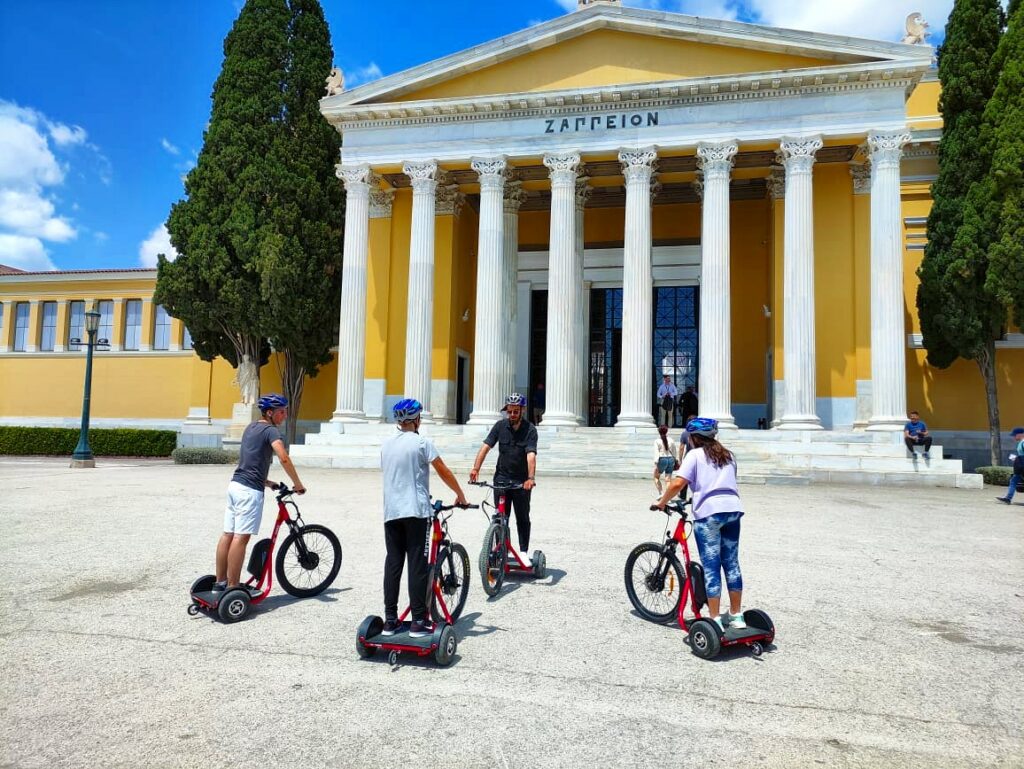
A comfortable pace helps too. Visitors who would rather cover several sights without a long walk can look into guided routes around places such as Plaka, Syntagma and the Acropolis viewpoint; an electric trike tour is one option, and Ayo Tours Athens is a local example. Whether exploring on foot or by another means, a greeting and a genuine thank you are often all the Greek needed for a good exchange.
Frequently asked questions
What Greek phrases should travelers learn first?
Start with “yassas” for hello, “efharistó” for thank you, and “parakaló” for please or you’re welcome. “Miláte anglika?” means “Do you speak English?” and is useful when you need help.
How do you order coffee in Greek?
You can say “ena kafé, parakaló,” which means “one coffee, please.” If the menu is unclear, try “To menu, parakaló” to ask for the menu.
How do you ask how much something costs in Greek?
Ask “Poso kani?” to mean “How much does it cost?” It can be useful at a market or small shop, though prices may already be shown.
How do you ask someone to speak more slowly in Greek?
Say “Pio arga, parakaló” to ask someone to speak more slowly. If you still cannot follow, “Den katalavéno” means “I don’t understand.”
Do you need to speak Greek to visit Athens?
No, many hotels, cafés, and major attractions in central Athens can assist visitors in English. A Greek greeting or thank-you is still a polite way to begin an exchange, and you can switch to English when needed.
How can you ask for directions in Greek?
“Pou ine…” means “Where is…” You can add a place name, or show the location on your phone, which helps make the question clear even if you do not know the full Greek sentence.