
Hadrian's Library Athens visitor guide questions often begin with a practical one: is this compact archaeological site worth fitting into a busy day? The answer becomes clearer once you know where it sits - right beside Monastiraki Square - and what to look for among its columns and walls.
This is a place where the city’s layers are unusually close together. Ancient ruins meet busy streets, market sounds and the everyday rush of central Athens, so a visit can be rewarding without taking half a day. A little preparation helps you see more than a quick photo stop.
Where is Hadrian’s Library, and how do you get there?
The site stands on Areos Street, on the north side of Monastiraki Square. From Monastiraki metro station, it is only a short walk; the entrance is easy to miss when the square is crowded, so look for the archaeological site’s stone enclosure rather than expecting a grand modern entrance.
If arriving on foot from Syntagma, allow roughly 10 to 15 minutes, depending on the crowds and your route. The surrounding lanes can be busy with shoppers and delivery scooters. Comfortable shoes are useful, though there is no steep climb to reach the entrance.
A visit pairs naturally with the Ancient Agora or the Roman Agora, both nearby. Check the current opening times and ticket arrangements before setting out, since schedules and access rules can change by season. If using a combined ticket, confirm which sites it covers and whether it is valid on the day you plan to visit.
What remains of Hadrian’s Library?
Emperor Hadrian commissioned the complex in the second century AD. It served as a major civic and cultural building, with spaces for books, study and public gatherings. The name can suggest a quiet modern library, but the original structure was much larger and more elaborate than the surviving remains might first imply.
As you walk through, look for the monumental western entrance and the line of Corinthian columns. The courtyard once held a garden and pool, while rooms along the sides served different purposes. The scale is easier to picture when you pause near the columns and imagine the enclosed courtyard extending around you, rather than viewing each remaining wall in isolation.
The site also reflects the long history of Athens after the classical period. Later communities adapted parts of the complex, and the remains include traces of buildings from different eras. A brief look at an on-site plan or sign can help connect these fragments to the wider story of the city.
How long should you allow?
For most visitors, 30 to 45 minutes is enough to walk around, read the interpretation and take a few photographs. Allow closer to an hour if you enjoy archaeology or want to sit with the details rather than move straight on. It is a manageable stop between a coffee near the square and a longer visit to the Agora.
The site is outdoors, with limited shade. On a hot afternoon, a morning visit can feel more comfortable, especially if you are travelling with children or older relatives. In cooler months, the midday light can be pleasant for photos, but check the forecast and opening hours before you go.
A compact visit can suit an Athens long layover what to do plan, provided there is enough time for airport transfers and security. Keep the itinerary realistic: the library is central, but a tight connection is a poor time to rely on a rushed walk through crowded streets.
What should you look for on site?
Start by taking in the western entrance from outside the enclosure, then follow the visitor route through the remains. Notice how the columns frame the open courtyard and how the surviving walls give clues to the building’s original footprint. Small details can be easy to miss if the whole visit becomes a hunt for the best camera angle.
The site is not a museum with a large indoor collection, so expectations matter. There may be uneven ground, exposed stone and limited seating. A lightweight water bottle is useful in warm weather, and a hat can make a difference when the sun is strong.
For a richer context, consider pairing the visit with the Roman Agora, where the Tower of the Winds offers another glimpse of ancient Athens, or the Ancient Agora, which has a broader range of remains. The city’s history is easier to grasp when several places are seen together, but there is no need to rush through all of them in one day.
Is it worth visiting without a guide?
Yes, particularly if you are short on time or already have a little background on Hadrian and Roman Athens. Reading the site’s signs and checking a map beforehand can provide enough context for a satisfying visit. A simple question to keep in mind is how this complex functioned as a public place, rather than only as a collection of ruins.
A guide can add value when the details feel hard to interpret or when you want to connect the site with the city’s wider history. The best choice depends on how you like to travel: independent visitors may prefer to linger at their own pace, while a guided walk can make several nearby landmarks feel like one coherent story.
The same practical thinking applies to an Athens history timeline for visitors: choose a few landmarks that represent different eras, instead of trying to remember every date. Hadrian’s Library works especially well as a short Roman-era stop between the older Agora and modern Monastiraki.
What else is nearby?
Monastiraki Square is a useful place to pause before or after the visit. The flea market streets are close, and cafés around the square offer an easy break, though prices and noise can vary from one lane to the next. For a quieter table, walk a few minutes away from the busiest edge of the square.
Plaka is also within walking distance. Its lanes are appealing for a slower wander, but they can be crowded in the middle of the day. If the main archaeological sites have left you hungry, look for a menu that names its dishes clearly and check whether prices include bread or extras before ordering.
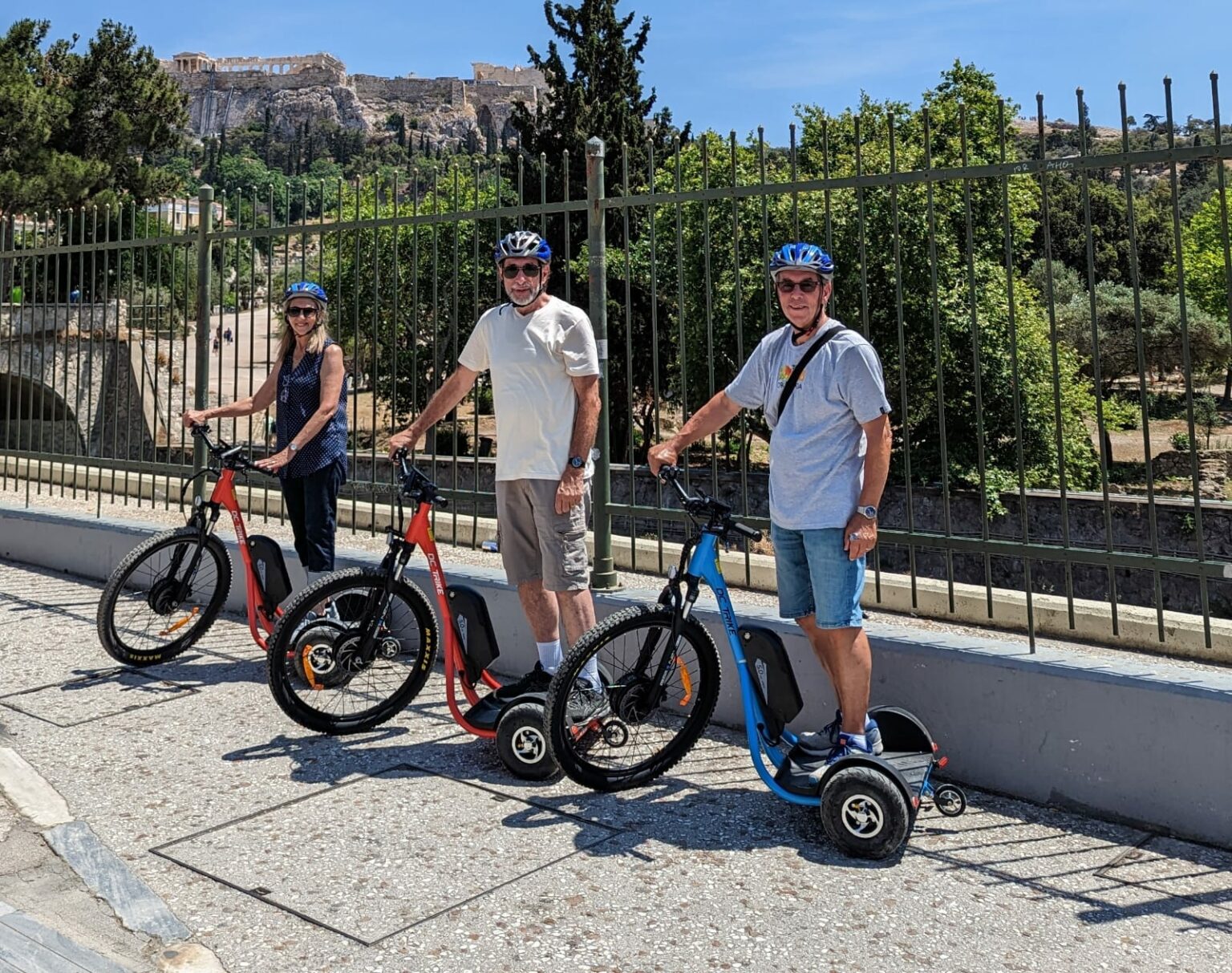
Visitors interested in a broader city outing might add the Acropolis viewpoint or Syntagma on another part of the day. For anyone tired of long walks on hot pavement, a local guided e-trike tour can link central sights with less time spent on foot. Ayo Tours Athens is one local operator offering electric-trike outings, though the same basic rule applies to any tour: check the route, duration and age requirements before booking.
Hadrian’s Library is best approached as a thoughtful pause, not a half-day attraction. Arrive with a little context, take time to look beyond the columns, then let the nearby streets show how ancient Athens sits inside the living city.
Frequently asked questions
Where is Hadrian’s Library in Athens?
Hadrian’s Library is on Areos Street, beside Monastiraki Square in central Athens. Monastiraki metro station is a short walk away, and the entrance is within the archaeological site’s stone enclosure.
How long does it take to visit Hadrian’s Library?
Most people need around 30 to 45 minutes to walk through the remains and read the on-site information. Allow more time if you want to take photographs or explore the history at a slower pace.
Is Hadrian’s Library worth visiting?
It can be a worthwhile stop if you enjoy ancient history or want to see archaeological remains without committing to a long visit. Its central location also makes it easy to combine with Monastiraki, the Roman Agora or the Ancient Agora.
What should I look for at Hadrian’s Library?
Look for the monumental western entrance, the Corinthian columns and the outline of the former courtyard. The surviving walls also show how the complex changed as later communities adapted parts of it.
Can you visit Hadrian’s Library without a guide?
Yes. The site is small enough to explore independently, and signs or a site plan can help explain the layout. A guide can add context about how the building was used and how it fits into Athens’ wider history.
What should I know before visiting Hadrian’s Library?
Check current opening hours and ticket arrangements before you go, as access details can change. The site is outdoors, with uneven surfaces and limited shade, so comfortable shoes and sun protection are useful in warm weather.