
You are planning your first trip to Athens, and somewhere between the excitement and the guidebooks, a friend mentions street crime, or you read a forum post about pickpockets, and suddenly you are wondering whether the city is actually safe. It is a fair question - one that deserves a straight answer, not reassurance that skips the real details.
The truth is simpler than the anxiety suggests, but it is also not quite "yes, it's fine" across the board. Athens is broadly safe for tourists, particularly in the areas where visitors spend most of their time. But like any major European city, it has pockets where common sense matters more than it might back home, and there are genuine small risks worth understanding so you can move through the city with actual confidence rather than vigilance that exhausts you.
The real picture - what actually happens
Athens is generally safe for visitors, but no city is free of crime. Take ordinary precautions in busy tourist areas and on public transport, and do not assume that crowds or a familiar-looking neighbourhood remove the risk.
Where the picture gets more complex is petty theft - and it is petty, in the sense of what is taken, though not in how it feels when it happens. Pickpocketing on crowded buses, metro trains during peak hours, and in very congested tourist spots like the Acropolis entrance is real. Bag snatching happens. Stay alert to distraction attempts and keep valuables secure, particularly on public transport and in crowded tourist areas.
Conditions vary from street to street. Ask your accommodation for advice on your planned route, especially after dark. Avoid demonstrations, including around Syntagma and Exarchia, where police may use tear gas.
When and where the real risks sit
Crowded public transport can create opportunities for theft at any time of day; do not limit your precautions to rush hour. Crowded trains are crowded everywhere, but in Athens the density is genuine, and a skilled pickpocket works in that chaos. Buses going to the airport can attract opportunistic theft from tourists who are distracted, tired, or juggling luggage. Use licensed taxis from official ranks or recognised apps, or ask your hotel to arrange one; confirm the fare and check the vehicle before getting in.
Late-night streets can involve additional risks, including the vulnerability that comes with being alone, possibly intoxicated, in an unfamiliar place where you might not speak the language. Syntagma at 2 am, or walking alone through Psyrri after dark, puts you in a position where bad luck could find you more easily. This is not unique to Athens; it is true of most cities.
The Acropolis area and Plaka are full of tourists by day and feel as safe as anywhere with crowds - which is to say, often busy but also where pickpockets work hardest. The same goes for Monastiraki and the ancient sites. Quieter times may be more comfortable, but keep the same precautions whenever you travel.
How locals actually move through the city
One useful frame is to notice how Athenians themselves behave. They are not paranoid. They do not grip their bags to their chests on the metro. They do not avoid neighborhoods during the day. They also do not leave their phone on a cafe table while they walk to the restroom, do not keep their wallet in a back pocket, and do not flash expensive cameras or jewelry. They move with ordinary street awareness - the kind you probably already have, just practiced.
The habit that makes the biggest difference is keeping your bag in front of you or at your side on public transport and in crowded spaces, and keeping phones and wallets out of easy reach. It sounds obvious, but it works because most pickpocketing is not elaborate - it is simple opportunism that succeeds because people are inattentive. A bag worn across your body is harder to rob than one hung from one shoulder. A front pocket is less exposed than a back pocket, but no pocket is theft-proof.
What safety actually looks like on the ground
Visiting Athens safely is largely about where you are and what time it is. Popular areas such as Plaka, Syntagma, Monastiraki, Psyrri and Kolonaki have many restaurants, hotels and shops, but lighting, crowds and conditions vary by street and time. Walking through them by day or early evening feels ordinary. The Acropolis viewpoint, the Temple of Olympian Zeus, the Panathenaic Stadium, Ancient Agora - all standard tourist stops - are widely visited during daylight hours; stay aware of your surroundings and belongings.
Many visitors find that exploring on foot, moving between neighborhoods in daylight, stopping for coffee or food, works fine. Some prefer guided experiences, partly for comfort and partly because a guide handles navigation and logistics. Either approach can work with ordinary precautions; it is a matter of whether you want that company and local knowledge, or whether you enjoy moving independently.
The metro is the fastest way to travel, and thousands of Athenians and tourists use it safely every day. During peak hours, keep your valuables secure and accept the crowding as normal. Off-peak times are less dense and feel more comfortable, even if slower. The airport transfer is easy - take a Line 3 airport train or an airport bus, both reliable and cheap.
A season and a practical routine
One honest detail: summer in Athens is hot - genuinely, physically demanding hot - and that exhaustion makes people less aware and more vulnerable. You are tired, sweating, moving slowly through crowds, checking maps on your phone. That is when small theft happens most easily. Cooler seasons may make sightseeing more comfortable, but theft precautions remain useful throughout the year.
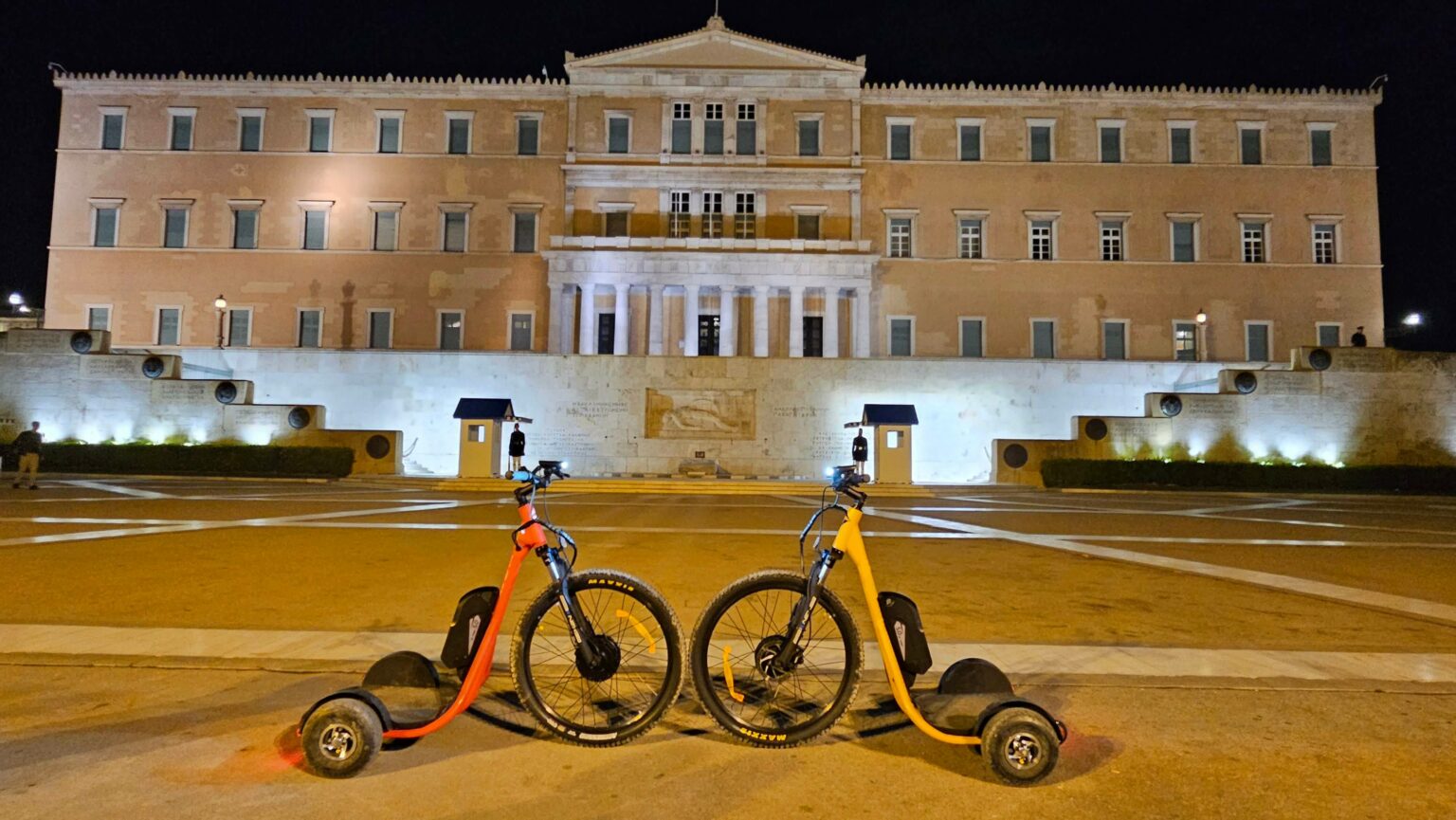
A practical routine that works: keep one small bag with essentials; leave your second bag at the hotel or not take it. Use the metro to jump between neighborhoods rather than walk long distances in the heat. Explore the quieter areas - Pangrati, Exarchia (during the day), neighborhoods beyond the main tourist zone - when you want that quieter rhythm, but do it by daylight and preferably on foot or by easy transport like an e-trike tour, which lets you cover ground comfortably without worrying about crowded buses or metro timing.
Athens is safe enough that you can enjoy it fully. It is not so safe that you can ignore ordinary precautions. The gap between those two statements is where the actual experience sits - a city you can trust if you stay aware, move sensibly, and remember that the vast majority of visitors have a wonderful time without incident.
Frequently asked questions
Is it safe to walk around Athens at night?
Main tourist areas like Plaka and the Acropolis feel reasonably safe in the evening with crowds around, but solo walks late at night, especially after drinking, carry more risk. Stick to well-lit streets and main neighborhoods, or use a licensed taxi booked through an official rank or recognised app to get back to your hotel.
Should I worry about pickpockets in Athens?
Pickpocketing does happen, particularly on crowded metro trains during rush hours and at busy tourist sites like the Acropolis entrance. The key is keeping your bag in front of you or across your body, and storing phones and wallets in front pockets rather than back pockets or loose bags.
Is public transport safe in Athens?
Public transport is widely used, but thefts occur on the metro and in crowded places at different times of day. Keep bags close and closed, secure phones and wallets, and do not leave luggage unattended.
Which Athens neighborhoods should tourists avoid?
Conditions vary by street and time. Ask your accommodation about your route after dark, stay on well-lit streets, and avoid demonstrations, particularly around Syntagma and Exarchia when protests are taking place.
Is violent crime a concern for tourists in Athens?
Athens is generally safe, but do not assume violent crime cannot occur. Use ordinary precautions, take extra care late at night, stay with your group and use licensed transport. Call 112 in an emergency.
How do I stay safe using taxis in Athens?
Use licensed yellow taxis from official ranks or recognised taxi apps, or ask your accommodation to book one. Confirm the fare before leaving, verify your booked vehicle and driver, and request a receipt.