
Kolonaki neighborhood Athens guide planning often starts with a map and a simple question: is this elegant corner of Athens worth a place in a short visit? It is, especially for travelers who enjoy a slower walk between cafés, galleries and city views rather than a day built entirely around ancient sites.
Kolonaki sits beneath Mount Lycabettus, southeast of central Athens. Its appeal lies in the contrast: smart shopfronts and quiet side streets are only a short walk from busy Syntagma and the National Garden. The best visit is not a race to tick off landmarks, but a few well-chosen stops with time to sit down.
Where is Kolonaki, and what does it feel like?
The neighborhood stretches roughly from Syntagma Square toward Lycabettus Hill, with Vasilissis Sofias Avenue along its western edge. Kolonaki Square is a useful starting point; from there, streets climb gently toward the hill and branch into café-lined lanes. A map can make the area look compact, but the uphill sections are noticeable in summer.
The atmosphere changes as you walk. Around the square, people meet for coffee beneath the trees; a few blocks away, boutiques and galleries share narrow streets with apartment buildings. In the early evening, locals often take a seat outdoors after work, while visitors pause to check directions or choose a place for dinner.
What should you see on a Kolonaki walk?
Begin at Kolonaki Square, then follow a street uphill toward the lower slopes of Lycabettus. The route offers a feel for the neighborhood without requiring a strict itinerary. Look out for small galleries and design shops, but check opening hours before planning around a particular exhibition: independent venues may close between lunch and evening.
The Museum of Cycladic Art is one of the area’s strongest cultural stops, especially for visitors interested in ancient objects and the distinctive Cycladic figurines. Nearby, the Benaki Museum’s main building gives a broader view of Greek history and culture. Either can fill a rewarding part of the day, so choosing one may leave more room for an unhurried stroll and a coffee.
For a memorable view, head toward the Lycabettus cable car station, which takes visitors up the hill. Walking to the summit is another option, but the climb is steep and exposed in places. On a hot afternoon, taking the cable car up and saving your energy for the view is a sensible choice; carry water even if the ride is short.
When is the best time to explore?
Morning is a comfortable time for a walk, particularly from late spring through early autumn. The streets are quieter, and a shaded table is easier to find before lunch. In the hottest months, plan the uphill part early or leave it for later in the day, when the light over the city softens.
Kolonaki also works well after a museum visit or between other central Athens stops. From Syntagma, it is close enough to reach on foot, though the walk uphill can feel longer with children, shopping bags or a full day behind you. In cooler weather, the neighborhood’s cafés offer a welcome pause; in rainy conditions, a museum visit makes a practical anchor.
Where can you eat or take a break?
Kolonaki has plenty of cafés, bakeries and restaurants, but the most convenient-looking table is not always the best value. Check the menu before sitting down, especially on streets close to the square, where prices can rise. A coffee and a small pastry make an easy break; for a fuller meal, compare a couple of nearby menus rather than choosing in a rush.
For a more relaxed stop, look one street away from the busiest stretch. A bakery counter is useful for a quick snack between museums, while a long lunch suits a day with no tight schedule. Greek food varies from simple grilled dishes to modern interpretations, so asking what is seasonal can lead to a better choice than ordering by habit.
Is Kolonaki manageable without a plan?
Yes. The neighborhood is straightforward to explore independently, and there is no need to book a guided visit just to walk its streets. A phone map, comfortable shoes and a rough idea of whether the day is for museums, shopping or views are usually enough. The main challenge is not finding your way, but deciding how much uphill walking feels comfortable.
The common mistake is trying to combine too many distant stops in one outing. Kolonaki, the Acropolis, the Ancient Agora and the Panathenaic Stadium are all central Athens highlights, but crossing between them on foot in midday heat can wear down a group quickly. It is often better to pair Kolonaki with one nearby museum, then use the metro or a taxi for a farther stop.
How can you make the hills easier?
Choose your route around energy, not just distance. Kolonaki’s lower streets are easier to browse, while Lycabettus demands more effort if approached on foot. Families with small children may prefer a short neighborhood loop, a break in the square and the cable car rather than a long climb; solo travelers can keep the walk flexible and stop whenever a street catches their eye.
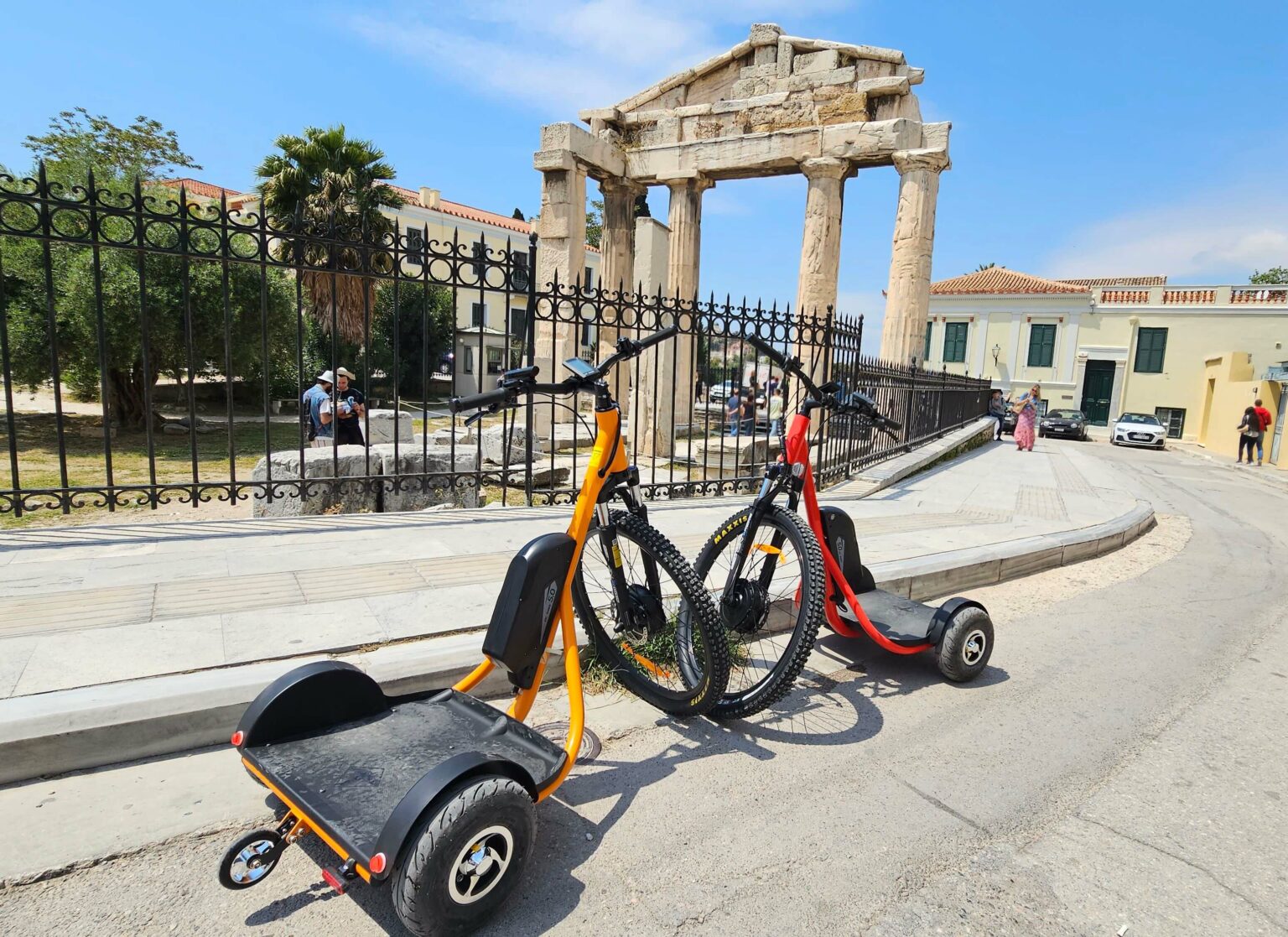
For visitors keen to cover more of Athens without spending the day walking, guided options can be useful. A local guide can connect places such as the Acropolis viewpoint, Plaka and Syntagma with the stories between them. Some visitors also choose electric trikes for a comfortable way to see several neighborhoods; Ayo Tours Athens is one local example, with stable three-wheeled vehicles that do not require balancing or pedaling.
What is a good half-day itinerary?
Start with the Benaki Museum or the Museum of Cycladic Art, allowing enough time to enjoy the collection rather than rushing through. Then walk to Kolonaki Square for lunch or coffee, and browse a few nearby streets. If the weather and your energy allow, finish with the Lycabettus viewpoint; otherwise, save the hill for a separate visit near sunset.
A gentler version begins with coffee, skips the uphill walk and focuses on the museums and side streets. That can be the better choice after a late arrival or a morning spent at the Acropolis. Kolonaki is at its best when the schedule leaves room to linger, and a Kolonaki neighborhood Athens guide is most useful as a starting point rather than a checklist.
Frequently asked questions
What is Kolonaki known for?
Kolonaki is known for stylish cafés, shops, galleries and cultural attractions beneath Lycabettus Hill. It offers a quieter, more polished contrast to Athens’s busiest tourist streets.
What are the best things to do in Kolonaki?
Walk around Kolonaki Square, browse the neighborhood’s boutiques and galleries, or visit the Museum of Cycladic Art or the Benaki Museum. For panoramic views, go up Lycabettus Hill by cable car or on foot.
Is Kolonaki worth visiting in Athens?
Kolonaki is worth a visit if you enjoy museums, café stops and a relaxed neighborhood walk. It is less focused on ancient landmarks than areas such as Plaka, but it makes a pleasant addition to a central Athens itinerary.
How long should you spend in Kolonaki?
Allow a few hours for a stroll, a café break and one museum. You may want longer if you plan to visit both museums or go up Lycabettus Hill.
Is Kolonaki easy to explore on foot?
The main streets and square are straightforward to explore on foot, but routes toward Lycabettus Hill climb uphill. Wear comfortable shoes and consider the heat when planning how far to walk.
How do you get to Kolonaki from Syntagma Square?
Kolonaki is within walking distance of Syntagma Square, with the route becoming more uphill as you approach the neighborhood. A map can help you choose a direct route and avoid extra climbing.