
By eleven in the morning in July, the marble around the Acropolis is already hot enough to feel through the soles of your shoes. Tourists who planned their itinerary the way they would in London or New York - a leisurely stroll from breakfast to lunch, sights ticked off in a neat line - often find themselves sitting on a curb somewhere near Plaka by early afternoon, fanning themselves with a paper map and wondering why nobody warned them properly.
The truth is that Athens in summer does not punish you for sightseeing. It punishes you for sightseeing at the wrong hour. The city has a rhythm that locals have followed for generations, and once you understand it, the heat stops being an obstacle and becomes just another detail to plan around, like currency or metro tickets.
Why Athens Heat Feels Different From Other Cities
Athens sits in a basin surrounded by mountains, which means the heat that builds up during the day has nowhere to go in the evening. Add the reflective effect of all that pale stone and marble in the historic center, and you get a city that can feel five or six degrees hotter than the number on your weather app suggests. A reading of 36 degrees near Syntagma Square can feel closer to 40 once you factor in the pavement glare.
This is different from, say, a beach heat, which comes with a breeze off the water. In central Athens, especially around the Ancient Agora or the Temple of Olympian Zeus, the air can feel still and heavy by midday. Locals have adapted by simply avoiding that window altogether, and visitors who copy the habit tend to enjoy their trip far more than those who push through.
The Two-Shift Day: How Locals Actually Structure Summer
Athenians have long split the day into two active shifts separated by a long, unapologetic pause. Shops close for a few hours in the early afternoon, cafes empty out, and even the stray cats disappear into whatever shade they can find under a parked scooter. Visitors who fight this rhythm, insisting on museum visits at 2pm, usually end up exhausted by day three.
A smarter approach is to treat the hours between roughly 12:30 and 4pm as downtime, not sightseeing time. This is when a long lunch, a hotel pool, or a slow coffee in a shaded taverna courtyard makes far more sense than another archaeological site. Save the big open-air landmarks - the Acropolis, the Panathenaic Stadium, the Agora - for the morning or the last few hours before sunset, when the light is softer and considerably more forgiving on camera too.
Morning Is for Monuments
If there is one rule worth following religiously, it is this: see the open-air sites before 10:30am. The Acropolis ticket lines move faster, the marble hasn't turned into a frying pan yet, and the famous view over the city is usually clearer before the afternoon haze sets in. Arriving at opening time also means fewer crowds in your photos, which matters if you're hoping for one of those clean shots of the Parthenon columns without fifty strangers in frame.
The Panathenaic Stadium, the only stadium in the world built entirely of marble and the site of the first modern Olympic Games in 1896, is another spot best seen early. By midday its white marble seating rows throw back enough glare to make lingering uncomfortable, but at 9am it is quiet, cool enough, and genuinely striking in the morning light.
Evenings Are for Wandering
Once the sun starts dropping, usually after 6:30pm in high summer, the city changes completely. This is when Athenians actually go outside. Plaka's narrow lanes fill up, rooftop bars near Monastiraki start catching a breeze, and the temperature drops enough that walking becomes pleasant again rather than something to endure. Many visitors save Syntagma Square and the changing of the guard, or a slow wander through Monastiraki's market stalls, for this later window.
Rethinking the Walking-Heavy Itinerary
Most first-time visitors build an Athens itinerary around walking, because that's how most European cities are best explored. Athens is different enough, heat-wise, that a purely walking itinerary in July or August can wear people down fast, especially families with young children or anyone with limited mobility who finds uneven ancient stone paths tiring even without the temperature working against them.
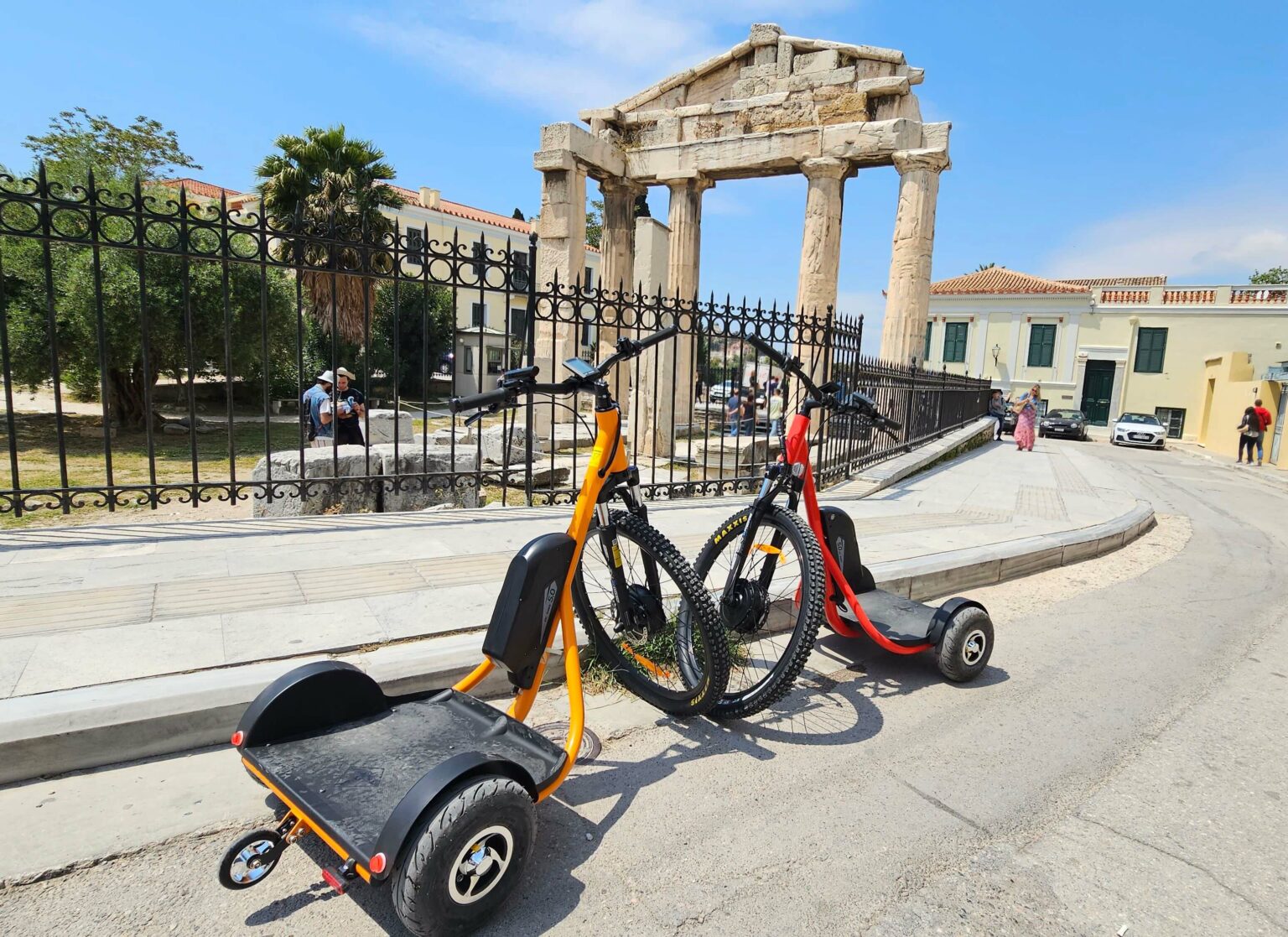
This is where alternatives are worth considering seriously rather than as a novelty. Guided tours on electric trikes, for instance, cover the same ground - the Acropolis viewpoint, the Ancient Agora, Syntagma, Plaka - without the accumulated fatigue of hours on foot in direct sun. There's no pedaling involved, which means no extra body heat generated on top of the ambient temperature, and the shaded seating and steady breeze from moving make a real difference on a 38-degree afternoon. For travelers researching e-bike or e-trike tours in Athens for the first time, the general idea is the same as a guided walking tour, just with far less physical strain and considerably more distance covered per hour.
It also opens up parts of the city that a tired, overheated walker might otherwise skip. Some of the more rewarding hidden corners of Athens - quiet neighborhoods just past Monastiraki, or lesser-known viewpoints away from the main tourist path - are close enough to reach by trike but far enough that most people wouldn't attempt them on foot in the heat.
What to Actually Pack (and What to Skip)
A wide-brimmed hat does more work than most sunscreens, mainly because it protects the back of the neck, a spot everyone forgets until it's sunburned and sore. A refillable water bottle matters more in Athens than almost anywhere else in Europe, since public fountains are common but disposable bottles get expensive and wasteful fast. Skip the heavy daypack full of layers - you won't need a jacket in July, and every extra item is just more weight to carry in the heat.
Breathable natural fabrics beat anything synthetic, and closed sandals tend to work better than sneakers on the smooth, sun-heated marble around the main archaeological sites. A portable fan sounds excessive until you're standing in line at the Acropolis at 11am wishing you had one.
Common Mistakes That Wear People Down Fast
The biggest mistake is treating day one like a normal city day, front-loading it with back-to-back sightseeing simply because of jet lag or excitement. Athens forgives almost nothing on that front, and most visitors who do this end up losing an entire afternoon to heat exhaustion, headaches, or plain fatigue.
Another common misstep is assuming a two day itinerary in Athens has to mean rushing every major highlight into daylight hours. It's entirely possible to build a satisfying two-day plan around early starts, long midday breaks, and an evening reserved for Plaka's tavernas and Monastiraki's markets, without ever feeling like you're racing the clock or the thermometer.
A smaller but common error is skipping breakfast to get an early start, then crashing by 11am with low blood sugar and high heat combined. A proper Greek breakfast, even something simple like yogurt with honey and a strong coffee, sets you up far better for a morning of walking or riding than an empty stomach ever will.
Summer in Athens rewards travelers who plan around the sun rather than against it. Front-load the big sights into the morning, treat the early afternoon as sacred rest time the way locals do, and save the golden evening hours for wandering, eating, and people-watching. Whether you cover the city on foot, by e-trike, or some mix of both, the heat stops feeling like an obstacle the moment you stop fighting the clock and start working with it.
Frequently asked questions
What time should I visit the Acropolis in summer?
Arrive at or shortly after opening, ideally before 10:30am. Morning visits mean shorter queues, cooler marble, clearer views across the city, and fewer crowds in photos. By midday the heat becomes intense and afternoon haze typically sets in.
What should I do during the hottest part of the day in Athens?
Locals take a proper break between roughly 12:30 and 4pm. This is the time for a long lunch, a swim at your hotel pool, or a leisurely coffee in a shaded courtyard. Shops and museums often have reduced hours during these hours anyway.
Why does Athens feel hotter than the weather forecast suggests?
The city sits in a basin surrounded by mountains, trapping heat that builds during the day. The pale marble and stone in the historic center reflect sunlight intensely. A reported temperature of 36 degrees can feel closer to 40 degrees when accounting for pavement glare and still air.
Is it worth visiting Athens in July and August?
Yes, but you need to respect the local rhythm rather than fight it. Early mornings and evenings are pleasant and lively. Adjusting your expectations about midday activity makes a significant difference to comfort and enjoyment compared to trying to sightsee continuously.
What alternative to walking tours helps in summer heat?
Electric trike tours let you cover major sites like the Acropolis viewpoint, Ancient Agora, and Plaka without the physical strain of walking on uneven ancient stone in intense heat. They work well for families, older visitors, and anyone wanting to explore comfortably.