
There is a stadium in Athens that hosted the first modern Olympics, is built entirely from marble, and still gets skipped by half the people who visit the city. Most travelers walk past it on the way from the National Garden to Kolonaki, glance at the pale horseshoe shape through the fence, and keep moving toward the Acropolis. That is a shame, because the Panathenaic Stadium has a story that connects ancient athletic contests to a torch that still gets lit here before every Olympic Games.
If you are planning a couple of days in Athens and trying to figure out where this stadium fits into the itinerary, or whether it is even worth the detour, it helps to know what makes the place unusual in the first place. It is not just another ruin. It is a working structure with a history that spans roughly 2,500 years, and understanding a few key facts about it changes how you experience standing inside it.
Why This Stadium Looks Different From Every Other Ancient Site in Athens
Almost everything else you see in Athens - the Parthenon, the columns of the Temple of Olympian Zeus, the stones of the Ancient Agora - is limestone or weathered marble that has lost its shine over the centuries. The Panathenaic Stadium is different because it was rebuilt in the late 1800s using Pentelic marble, the same brilliant white stone quarried for the Parthenon itself. Under midday sun, the seating rows practically glow, which is why locals sometimes call it Kallimarmaro, meaning "beautifully marbled."
That brightness is not an accident of restoration. The stadium's original footprint dates back to 330 BC, when it hosted the Panathenaic Games, a religious and athletic festival held in honor of the goddess Athena. What visitors walk through today is largely a 19th-century reconstruction, funded by a wealthy Greek benefactor named Georgios Averoff ahead of the 1896 Olympics, but it follows the exact ancient layout, curves and all.
The 1896 Olympics Connection Most Visitors Don't Expect
Here is one of the more surprising Panathenaic Stadium Athens facts: this is where the first Olympic Games of the modern era took place. Not Athens in general, this specific stadium, on this specific track. Spyridon Louis, a Greek water-carrier from a village outside Athens, won the marathon in front of a home crowd here, and the moment is still treated as something close to a national legend.
The stadium seats around 45,000 people, all on marble benches with no cushioning whatsoever, which gives a small hint of just how much stamina spectators needed back then. Walking down to track level and looking up at those tiered seats gives a genuine sense of scale that photos from the street never quite capture. It is one of the few Olympic venues in the world where you can stand on the actual finish line of the first modern Games.
Where the Olympic Torch Tradition Really Begins
Every four years, before the Olympic flame travels to its host city, it passes through the Panathenaic Stadium as part of the handover ceremony. This is the spot where the torch is symbolically presented to the next host nation, tying every modern Olympics back to this one stadium in Athens. Standing in the tunnel where athletes once entered, it is easy to picture the flame being carried through in front of a packed crowd.
What You'll Actually See When You Visit
The stadium is smaller in width than a modern athletics venue but longer and narrower, following the ancient Greek track shape rather than the oval most people expect. There is a small museum near the entrance with old Olympic memorabilia, torches from various Games, and photographs from 1896 that are worth a slow look. Entry is inexpensive and the visit itself takes about thirty to forty minutes unless you decide to sit on the top row and take in the view over the National Garden.
Photographers tend to love this place for a reason that has nothing to do with ancient history: the symmetry. Standing at one end of the track with the curved seating framing both sides makes for one of the more striking photography spots in Athens, especially in the early morning light before tour groups arrive. It is a favorite among people hunting for Athens photography spots that do not look like every other Acropolis shot on their feed.
Fitting It Into a Two-Day Athens Itinerary Without Rushing
Most Athens itineraries pile the Acropolis, the Ancient Agora and the Temple of Olympian Zeus into one long, hot morning, then leave the stadium as an afterthought or skip it entirely. A better approach is to treat this stretch of the city as one continuous route, since the stadium sits close enough to the Zappeion and the National Garden to fold in naturally on foot or on wheels. Families with young children in particular tend to appreciate a slower pace through this part of town after a couple of hours climbing around ruins.
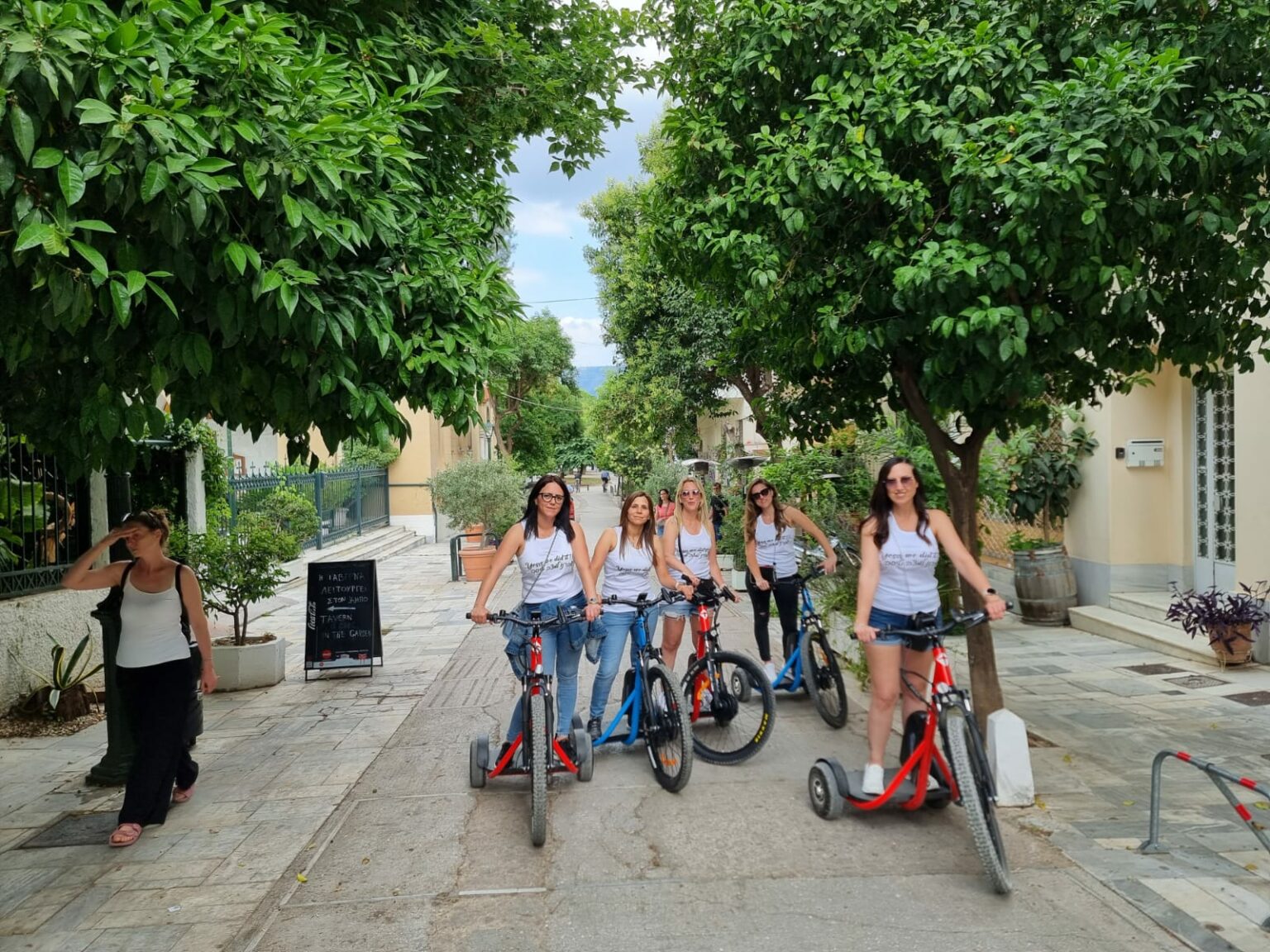
This is where a guided tour on an electric trike earns its keep. Covering the distance between the Temple of Olympian Zeus, the stadium, and back toward Syntagma on foot in the Athens heat wears people out fast, especially with kids in tow or a grandparent who cannot manage long uphill stretches. On an e-trike, there is no pedaling and no balancing required, so the ride itself becomes part of the relaxing scenery rather than another physical task on the list. It is also a practical option for travelers looking for accessible tours in Athens with limited mobility, since the trikes remove the strain that walking tours put on knees and hips.
A Few Practical Notes Before You Go
The stadium can get slippery when wet, since marble does not offer much grip, so rubber-soled shoes are a smarter choice than sandals if rain is forecast. Shade is scarce inside the seating bowl, so a hat and water matter more here than at almost any other stop in the city. Early morning or the hour before closing tend to have the fewest visitors, which also happens to be when the light does the most flattering things to that white marble.
Some travelers wonder if the stadium is worth including at all when time in Athens is tight and there are so many hidden gems off the beaten path competing for attention. The honest answer is that it depends on what kind of traveler you are: history lovers and Olympics fans will find it unmissable, while those chasing only ancient ruins might treat it as a quick fifteen-minute stop on the way to somewhere else.
Whichever way you plan the visit, the Panathenaic Stadium rewards anyone willing to spend even a short while there. It is rare to find a place in Athens where ancient tradition, national pride and Olympic history line up so cleanly in one building, and rarer still to find it this easy to reach on the way to everywhere else you already wanted to go.
Frequently asked questions
Why is the Panathenaic Stadium different from other ancient sites in Athens?
The stadium was reconstructed in the 1890s using gleaming white Pentelic marble, the same stone used for the Parthenon, which gives it a bright appearance unlike the weathered limestone and worn marble found at other ancient ruins around the city. This marble quality is so striking that locals call it Kallimarmaro, meaning beautifully marbled.
When was the Panathenaic Stadium built and what is its history?
The original stadium dates to around 330 BC when it hosted the Panathenaic Games, an athletic and religious festival. A wealthy benefactor named Georgios Averoff funded a complete reconstruction in the late 1800s following the exact ancient layout, and it opened to the world in 1896 as the host venue for the first modern Olympic Games.
What happened at the Panathenaic Stadium during the 1896 Olympics?
The first modern Olympic Games took place here, and Greek runner Spyridon Louis won the marathon in front of a home crowd, a moment that remains central to Greek sporting history. The stadium still seats around 45,000 people on its marble benches and remains one of the few Olympic venues where visitors can stand on the actual finish line from the original Games.
How is the Panathenaic Stadium connected to today's Olympic Games?
Before every Olympic Games, the Olympic torch passes through the stadium as part of an official handover ceremony where it is symbolically presented to the next host nation. This tradition ties every modern Olympics back to this single stadium in Athens.
How long does it take to visit the Panathenaic Stadium?
A typical visit takes between thirty to forty minutes, though you can spend longer if you climb to the top row for views over the National Garden or browse the small on-site museum featuring Olympic memorabilia and photographs from 1896. The entry fee is inexpensive.
Is the Panathenaic Stadium worth visiting on a short trip to Athens?
Yes, especially if you want to experience a working Olympic venue and understand how the modern Games connect to ancient history. The stadium's distinctive marble seating and symmetrical design also make it a favorite photography spot that feels less crowded than major Acropolis views.