
Two days in Athens sounds generous until you actually sit down with a map and realize how much is packed into this city. Someone in the group inevitably says "we can do the Acropolis, the food tour, the islands, and shopping, right?" and the honest answer is: not really, not without turning the trip into a blur of taxi rides and regret. The people who leave Athens happiest after a short stay are rarely the ones who tried to see everything. They are the ones who picked a handful of things that actually matter to them and gave each one enough breathing room.
That is the real challenge of a 48-hour visit. It is not a lack of things to do in Athens, Greece - it is an overload of good options competing for the same few hours. Before picking hotels or restaurants, it helps to decide what kind of trip this is: history-heavy, food-focused, family-paced, or a mix that leans light on walking and heavy on atmosphere. That single decision shapes everything else.
Day One: Ancient Athens Without the Exhaustion
The classic move is to start at the Acropolis early, before the heat and the crowds arrive together around 10am. From there, most people continue down into the Ancient Agora, where the ruins feel less monumental and more human - old marketplace stones, olive trees, and a small museum worth twenty quiet minutes. It is one of the best-value stops in the city and rarely gets the attention it deserves.
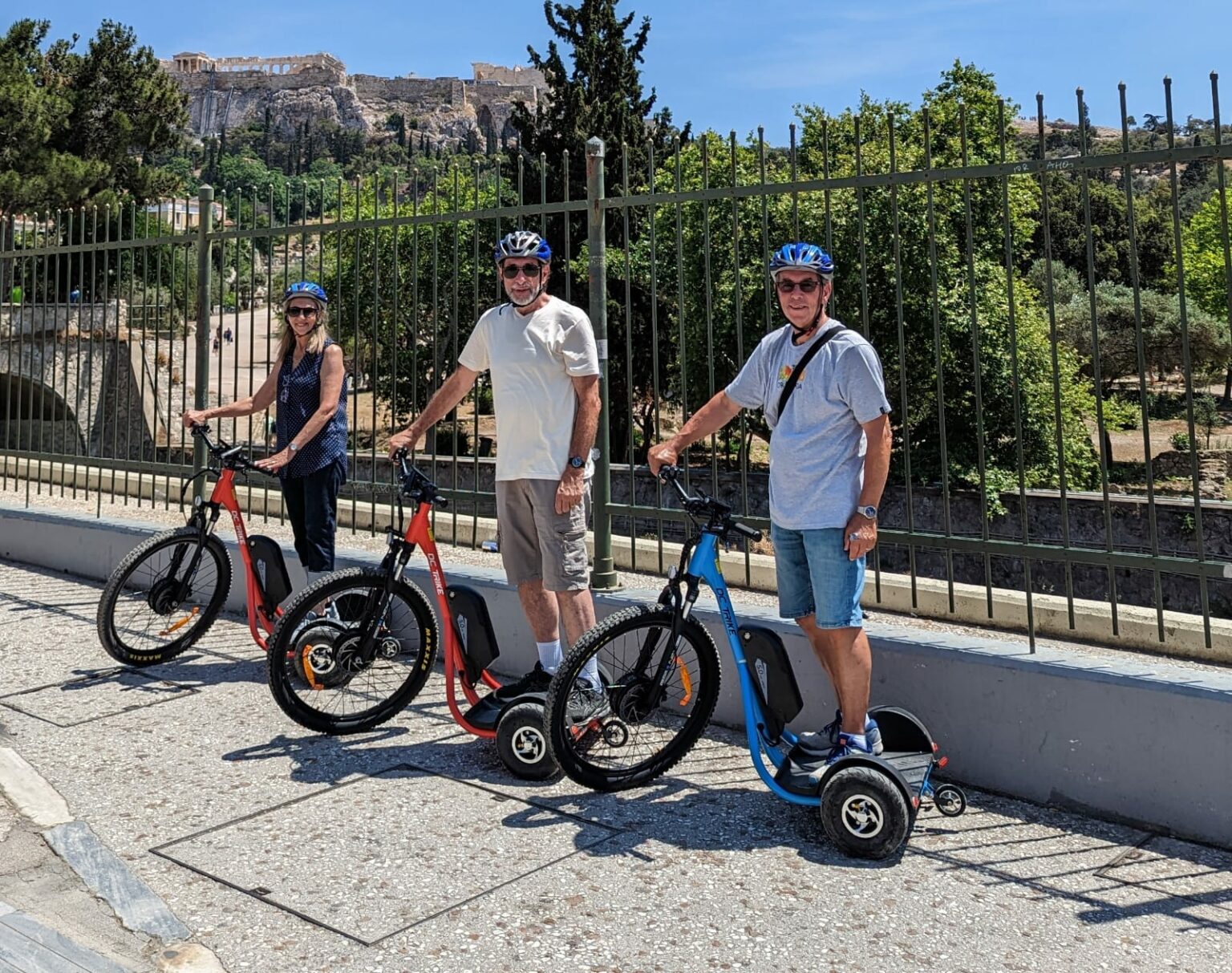
The mistake many first-timers make is walking this entire route on foot in August heat, stopping every ten minutes to check a phone for directions, and arriving at lunch already worn out. An easier approach many travelers now choose is joining a guided e-trike tour that covers the Acropolis viewpoint, the Ancient Agora, and the Temple of Olympian Zeus in one smooth loop, with someone else handling the navigation and the history. The Temple of Olympian Zeus, in particular, is easy to skip if you are tired by that point in the day, which is a shame - it was once the largest temple in Greece, and the fifteen surviving columns still give a real sense of its original scale.
Why Zeus's Temple Deserves More Than a Glance
Most visitors walk past on their way to Syntagma and only glance through the fence. Standing closer, near the entrance to the National Garden, gives a much better sense of how massive this structure was compared to almost anything else built in antiquity. It also sits right next to a shaded, pleasant patch of park - a natural point to slow down before the afternoon.
Afternoon One: Plaka and the Streets That Feel Like a Postcard
By early afternoon, Plaka is the natural next stop. Narrow lanes, bougainvillea spilling over balconies, tiny churches tucked between souvenir shops - it is the part of Athens that photographs itself. Anyone building a list of Athens photography spots for Instagram should know that the quiet side streets just off the main Plaka drag, away from the crowds near Adrianou Street, tend to produce far better shots than the busy corners everyone else is standing in.
Plaka must-see stops usually include the Anafiotika neighborhood, a cluster of small whitewashed houses built by island workers in the 1800s that genuinely feels like a Cycladic village dropped into the middle of Athens. Nearby Monastiraki offers a louder, more market-driven contrast - flea market stalls, street food, and the kind of chaotic energy that balances out Plaka's calm.
Day Two: A Different Pace, A Different Athens
The second day works best with a shift in rhythm. After a day of ancient sites, most travelers are ready for something more current - Syntagma Square, the changing of the guard at the Greek Parliament, and a walk toward the Panathenaic Stadium, the site of the first modern Olympic Games in 1896. It is a striking building, all white marble, and one that tends to surprise people who did not expect a full-size ancient-style stadium sitting quietly in a modern neighborhood.
Families traveling with children often find the second day easier to plan around kid-friendly stops. Among things to do in Athens, Greece with kids, a themed tour that mixes movement with storytelling tends to work better than another museum. Children aged five to seven can ride along with a parent on an e-trike, which removes the usual "how far can small legs actually walk" problem that derails so many family itineraries.
What If You Are Visiting for Just a Few Hours?
Cruise passengers face a slightly different version of this puzzle. For those looking into things to do in Athens, Greece from a cruise ship, the port at Piraeus adds travel time on both ends, so the two-day plan above often gets condensed into a single tight loop: Acropolis viewpoint, Plaka, and one food stop, done efficiently rather than leisurely. It is worth building in extra time for traffic near the port, since that is the detail most easily forgotten by first-time cruise travelers.
Rethinking the "Do It Yourself" Approach
Plenty of visitors assume a short trip is simple enough to plan alone, and for some travelers that is true. But two days is exactly the length of stay where inefficiency costs the most - a wrong turn or an underestimated distance eats into a schedule that has no slack in it. Guided options, including small-group tours run by companies like Ayo Tours Athens, exist largely to solve this specific problem: covering the highlights in the right order, at a comfortable pace, without the guesswork.
This matters even more for travelers thinking about athens accessible tours for limited mobility, where standard walking tours simply are not realistic. An electric, no-pedaling trike removes hills and long distances from the equation entirely, which opens up sightseeing to people who might otherwise have to skip half the list.
Timing the Trip Right
Anyone still deciding when the best time to visit Athens, Greece falls on the calendar should know that spring and autumn offer the easiest walking conditions - mild days, fewer crowds than peak summer. Winter has its own quiet charm too, and travelers asking what to do in Athens with kids in winter often find the sites far less crowded, with shorter lines and cooler, more comfortable days for exploring on foot or by trike.
Two days is not a lot of time, but it is enough to walk away with a real sense of the city rather than a checklist of photos. The trick is choosing a rhythm that matches the people you are traveling with, leaving room for at least one unplanned coffee stop, and trusting that Athens rewards a slower, more selective visit far more than a rushed one.
Frequently asked questions
What are the must-see sights to visit in Athens in two days?
The core highlights are the Acropolis, Ancient Agora, Temple of Olympian Zeus, Plaka, Monastiraki, Syntagma Square, and the Panathenaic Stadium. Focusing on these rather than rushing through every site helps you enjoy each one without feeling hurried. The best itineraries also include at least one food experience or neighborhood walk that reflects modern Athens.
Is it better to walk or take a tour in Athens?
Walking works if you enjoy hot sun and navigation stops, but many visitors find a guided e-trike tour more comfortable, especially in summer heat. A tour covers more ground without exhaustion, includes local knowledge about history and neighborhoods, and leaves you fresher for exploring on foot in areas like Plaka and Monastiraki where wandering is part of the experience.
How should I split two days between ancient and modern Athens?
Day one traditionally focuses on ancient sites - the Acropolis area, Agora, and Olympian Zeus - which creates a natural historical arc. Day two works better with a rhythm shift toward modern Athens, including Syntagma, the Parliament building, the Panathenaic Stadium, and cultural experiences like food tours or neighborhood walks that reflect how the city lives today.
Can I do an e-trike tour with children in Athens?
Yes. Children aged five to seven can ride alongside a parent on an e-trike, which removes the typical exhaustion problem of long family walks in hot weather. E-trike tours that include storytelling and themed stops work particularly well for keeping younger travelers engaged while covering significant ground.
What time should I start visiting the Acropolis?
Early morning is strongly recommended, ideally before 10am, when temperatures are lower and crowds have not yet arrived in full force. Starting your day here means you approach the site with energy rather than arriving already tired from heat and walking.
Why is the Temple of Olympian Zeus worth visiting?
Though often glanced at rather than properly explored, this temple was once the largest in ancient Greece. The fifteen surviving columns still convey its original scale and grandeur, and it sits near pleasant shaded gardens - making it a good place to pause and absorb rather than rush past on the way elsewhere.